Concrete Patio Ideas for Homes: Finishes, Layouts, Costs, and Planning Tips
A concrete patio can completely change how you use your outdoor space. It gives you a clean, stable area for seating, dining, grilling, relaxing, and spending time outside without dealing with loose gravel, uneven ground, or high-maintenance materials.
Many homeowners start with one simple question: what kind of concrete patio should I build? The answer depends on your yard, your budget, your home’s style, and how you plan to use the space.
This guide covers practical concrete patio ideas, finish options, layout choices, cost considerations, and planning details that help you make a confident decision before starting your project.
If you are comparing outdoor concrete options, you can also review Northmen Concrete’s
concrete patio installation in Syracuse for more project-specific information.
Why Concrete Patios Remain a Popular Choice
Concrete patios work well because they balance durability, design flexibility, and long-term value. Unlike wood decking, concrete does not require staining, board replacement, or regular structural maintenance. Unlike gravel, it creates a smooth and stable surface for furniture and foot traffic.
Concrete also gives homeowners more design control than many people expect. You can choose a simple broom finish, a decorative stamped pattern, a colored finish, or a clean modern layout with defined edges.
For homeowners who want a patio that looks intentional without becoming overly complicated, concrete remains one of the most practical options.
Start With How You Plan to Use the Patio
The best patio design starts with function. Before choosing a finish or shape, think about how you will use the space most often.
Common patio uses include:
- Outdoor dining
- Lounge seating
- Grilling area
- Fire pit seating
- Hot tub pad
- Backyard gathering space
- Walkout patio from a sliding door
A small seating area may only need a simple rectangular layout. A larger backyard may benefit from separate zones for dining, grilling, and relaxing.
When the layout matches your lifestyle, the patio feels more natural and easier to use.
Popular Concrete Patio Layout Ideas
Concrete patios can follow many layouts. The right one depends on the size of your yard, the shape of your home, and how much outdoor space you want to create.
Simple Rectangular Patio
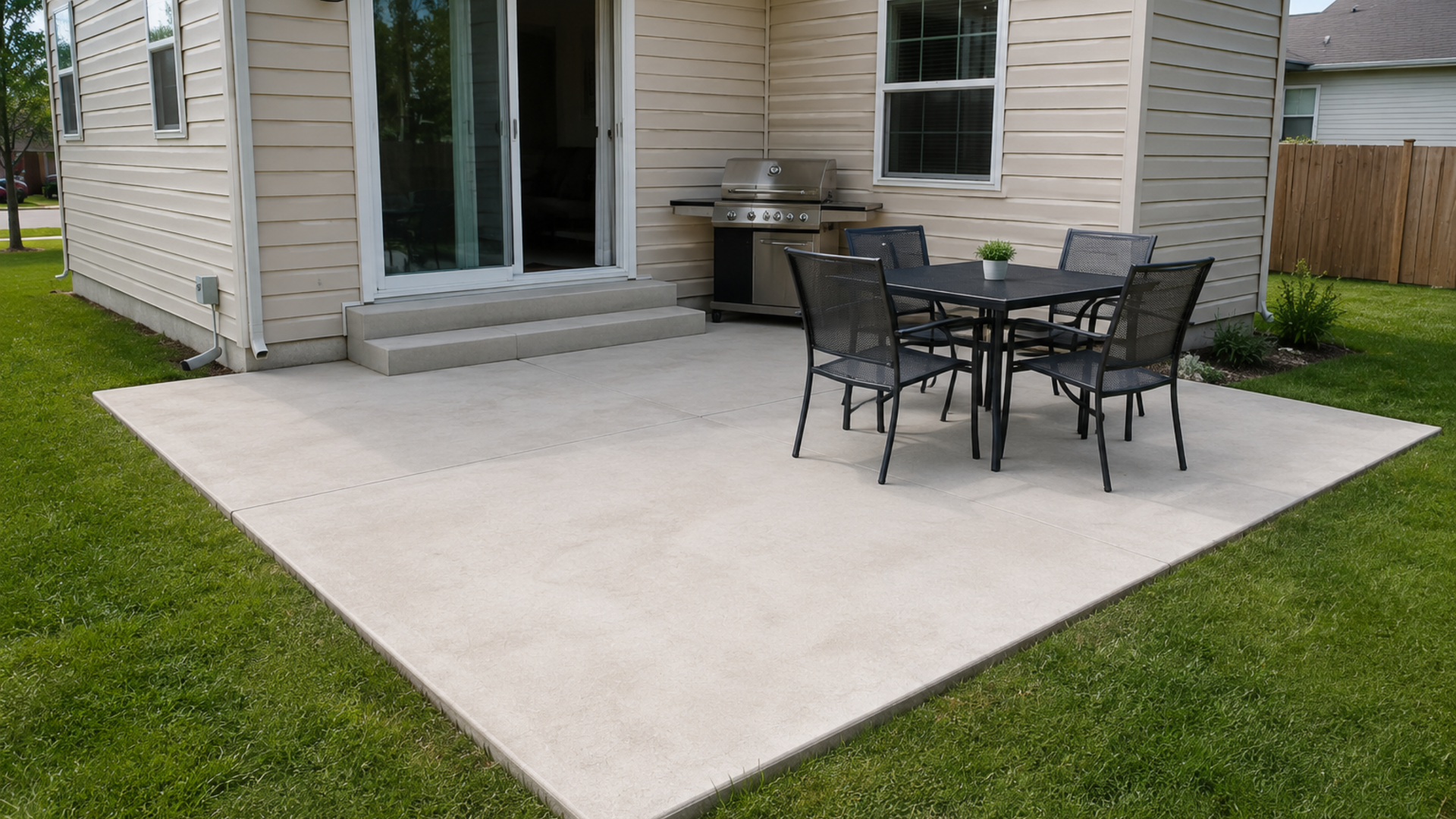
A rectangular patio works well for most homes. It offers a clean look, easy furniture placement, and efficient installation.
This layout fits well behind sliding doors, near outdoor kitchens, or along the back of the home. It also keeps costs more predictable because the formwork stays simple.
Extended Patio With Seating Area
Some homeowners start with a basic patio and extend one side for outdoor seating. This layout works well when you want a dining table near the house and lounge chairs farther out.
It creates more usable space without making the patio feel oversized.
Curved Patio Design
Curved patios soften the look of a backyard. They work especially well in landscaped yards or spaces with garden beds, pathways, or natural edges.
Curves require more forming and planning, which can increase cost. Still, they can make the patio feel more custom.
Multi-Zone Patio
A multi-zone patio separates different activities. For example, one area may hold a dining table, while another section creates space for a fire pit.
This layout works best for larger yards. It also helps homeowners avoid crowding too many features into one small area.
Concrete Patio Finish Options
The finish affects appearance, traction, maintenance, and cost. This is one of the most important decisions in the planning process.
Broom Finish Concrete Patio
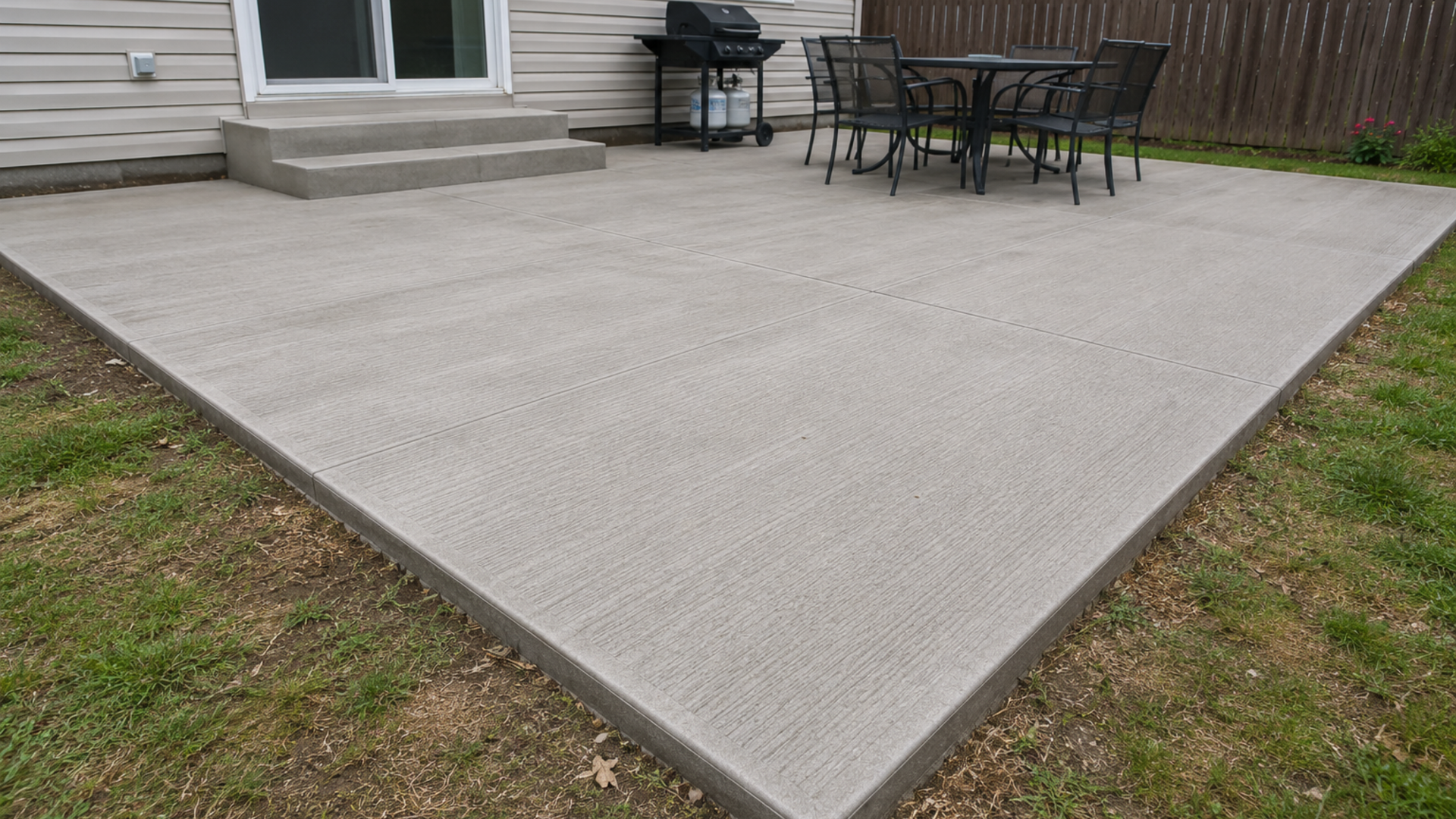
A broom finish is one of the most common patio finishes. Contractors create it by dragging a broom across the surface before the concrete fully hardens.
This finish provides:
- Good traction
- Clean appearance
- Lower cost
- Easy maintenance
A broom finish works well for homeowners who want a practical patio without decorative upgrades.
Smooth Finish Concrete Patio
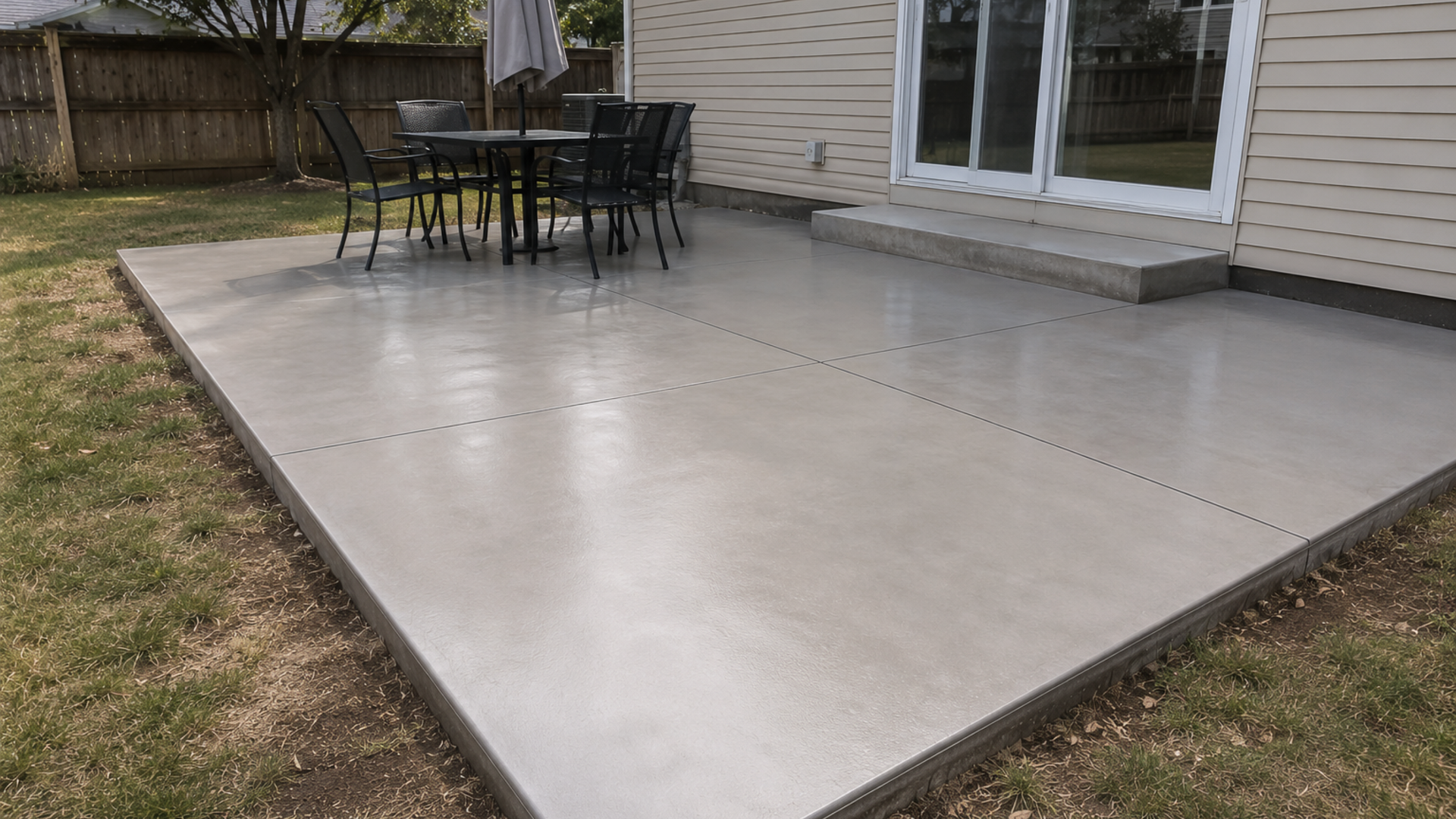
A smooth finish creates a cleaner and more modern look. However, it may become slippery when wet, especially in uncovered areas.
This option works best for covered patios, low-traffic areas, or spaces where traction does not create a major concern.
Exposed Aggregate Patio
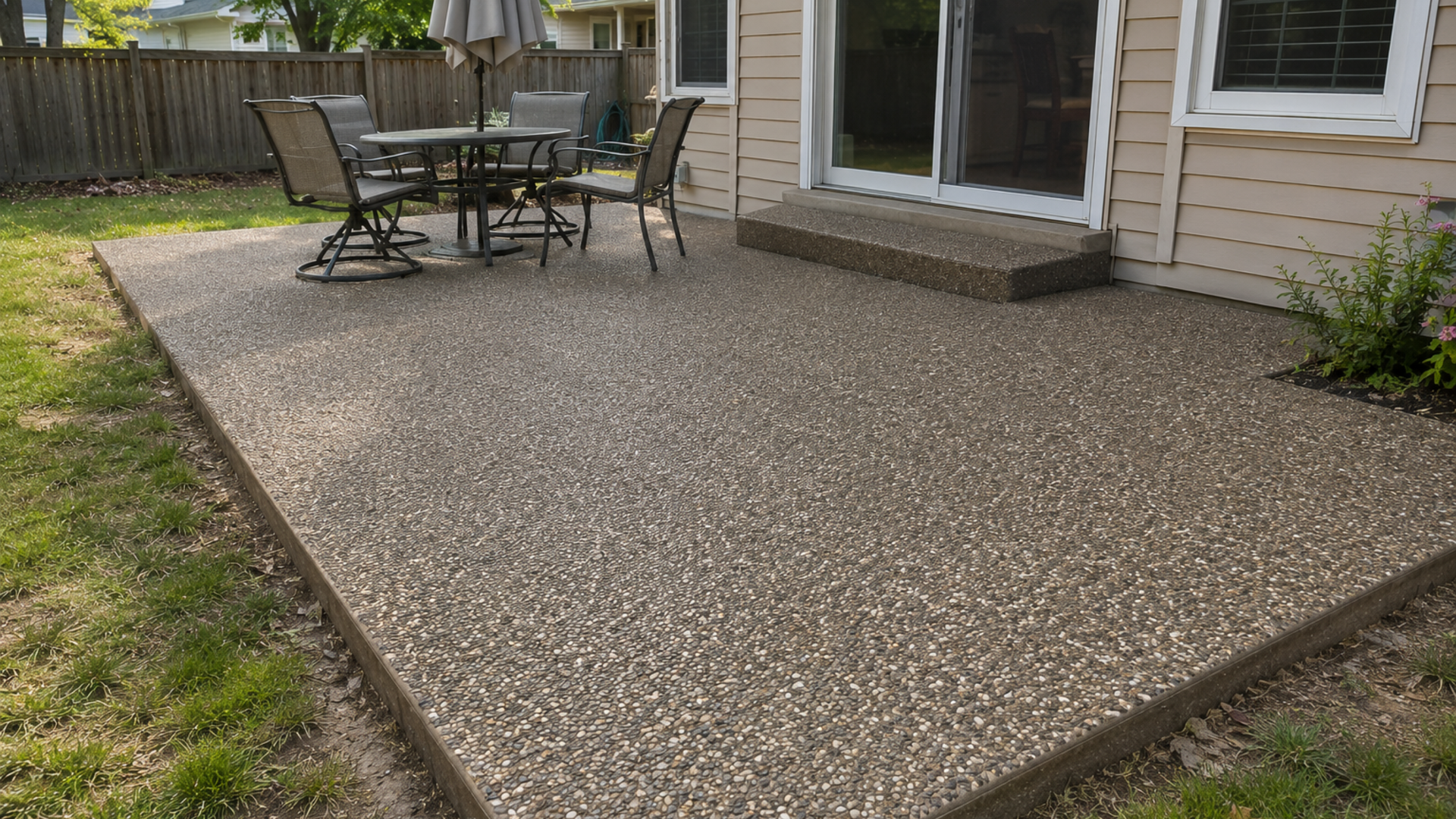
Exposed aggregate reveals the small stones within the concrete surface. It adds texture and visual interest without relying on stamped patterns.
This finish offers strong traction and a more decorative look. It works well for patios, walkways, and backyard spaces where texture adds value.
Stamped Concrete Patio
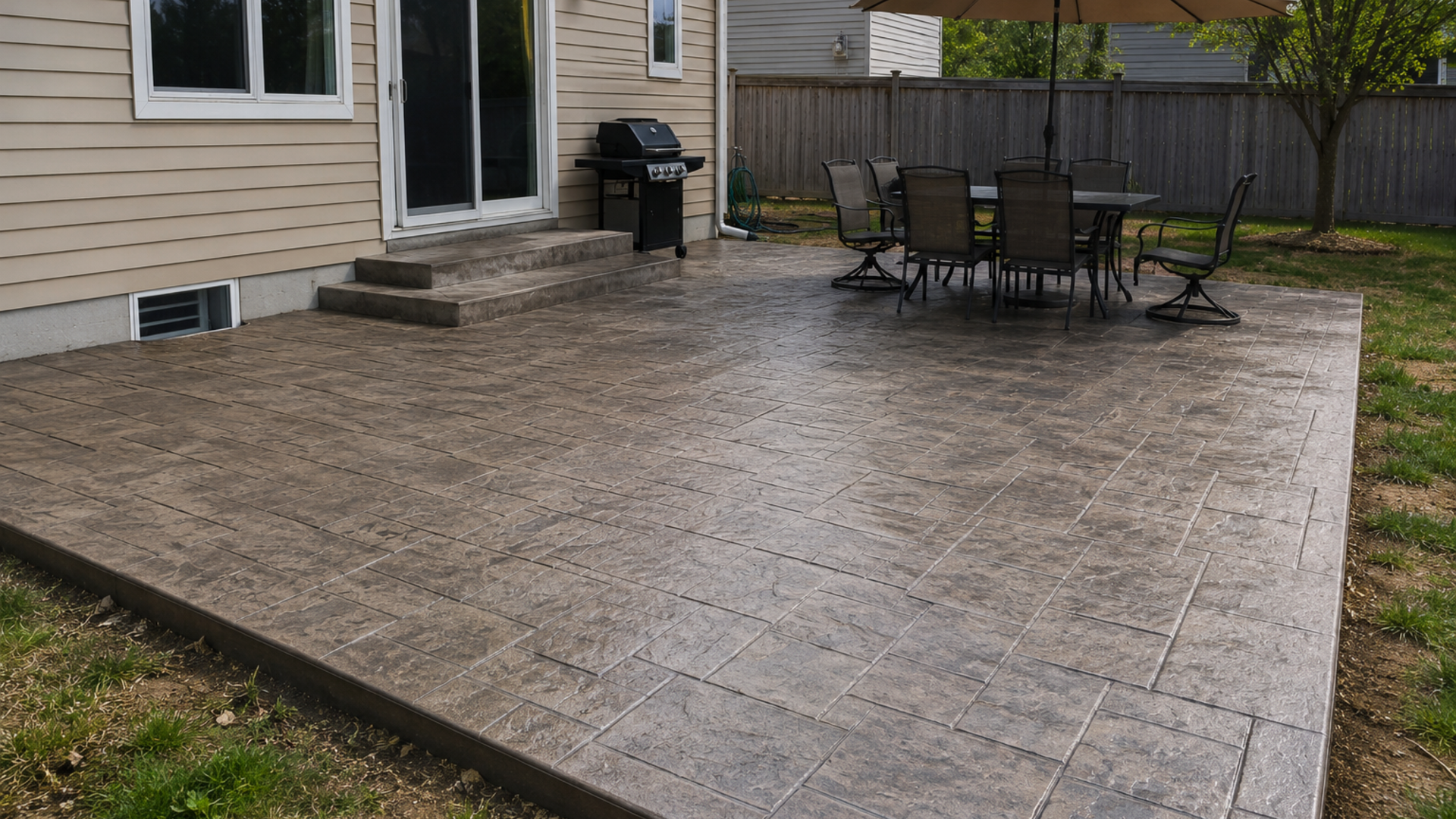
Stamped concrete can mimic stone, slate, brick, or pavers. It gives homeowners a higher-end look while still using poured concrete.
Stamped concrete requires skilled installation and proper sealing. It also costs more than a basic finish, but many homeowners choose it for the appearance and design flexibility.
If you are considering decorative work, Northmen Concrete’s stamped and colored concrete services can support more customized patio designs.
Colored Concrete Patio
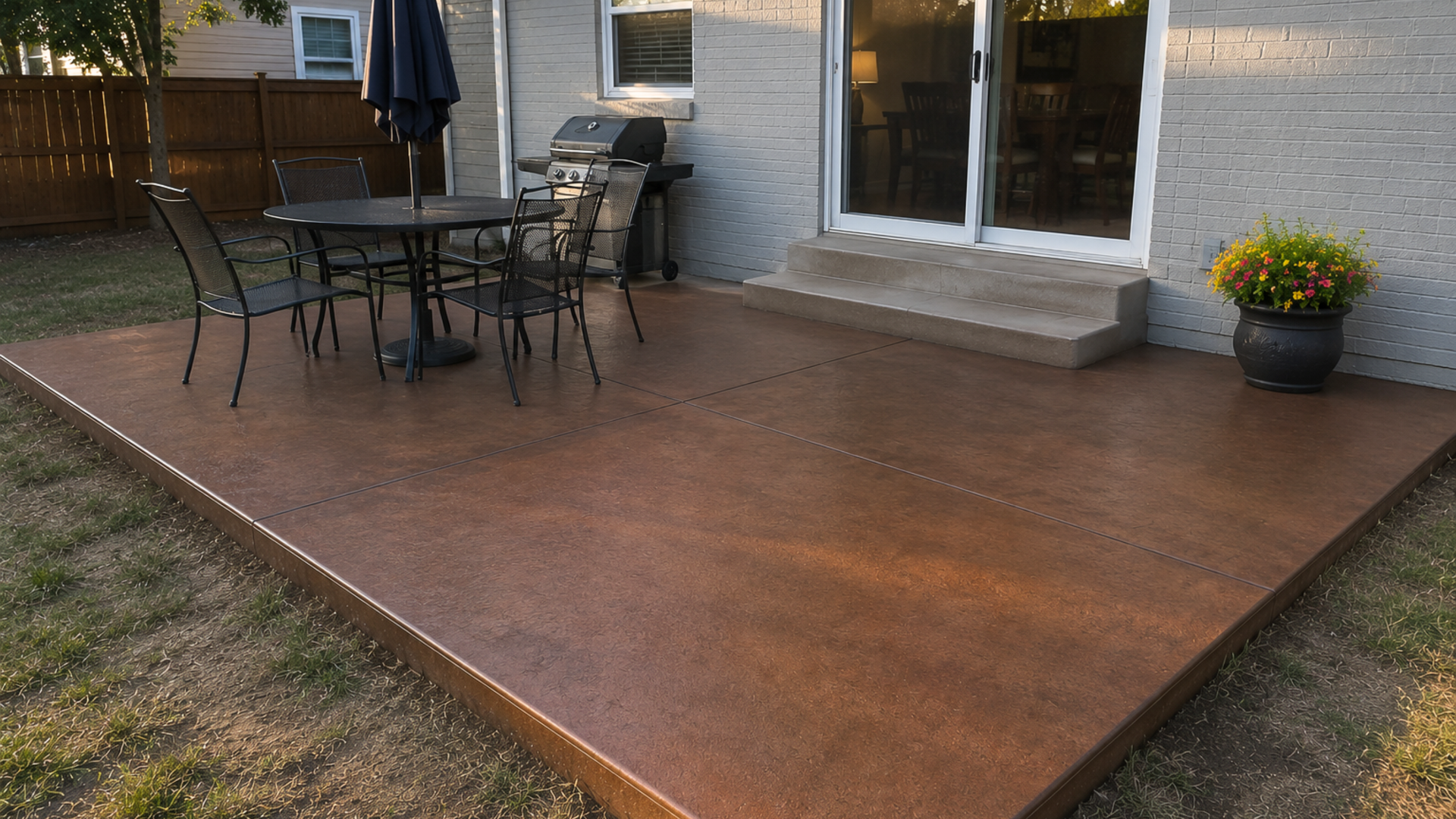
Colored concrete adds warmth and depth to the patio. Homeowners often choose tan, charcoal, soft gray, or earth-toned colors to match the home exterior.
Color can be added throughout the mix or applied as a surface treatment, depending on the project.
Concrete Patio Cost by Finish Type
Concrete patio pricing depends on size, site preparation, finish type, access, and design complexity. The table below gives a realistic way to compare common options.
| Patio Finish Type | Typical Cost Level | Best For | Maintenance Level |
|---|---|---|---|
| Broom Finish | Lower | Simple patios, dining areas, functional spaces | Low |
| Smooth Finish | Lower to moderate | Covered patios, modern spaces | Low to moderate |
| Exposed Aggregate | Moderate | Textured patios, decorative outdoor areas | Moderate |
| Colored Concrete | Moderate | Homes needing color coordination | Moderate |
| Stamped Concrete | Higher | Decorative patios, custom backyard spaces | Moderate to higher |
Decorative finishes usually cost more because they require additional materials, labor, timing, and sealing. However, they can also improve curb appeal and make the patio feel more finished.
How Patio Size Affects Cost and Usability
Patio size should match the way you plan to use the space. A patio that is too small may feel cramped once furniture is added. A patio that is too large may cost more than necessary and feel disconnected from the yard.
Here are common size guidelines:
| Patio Use | Suggested Size Range |
|---|---|
| Small seating area | 100 to 200 sq. ft. |
| Dining area for 4 to 6 people | 200 to 300 sq. ft. |
| Dining plus lounge seating | 300 to 500 sq. ft. |
| Large backyard entertaining space | 500+ sq. ft. |
These ranges are general, but they help homeowners think through space planning before installation.
A good contractor will consider furniture layout, walking paths, door access, and yard flow before recommending a final size.
Planning Around Drainage and Slope
Drainage matters for every patio. A patio should direct water away from the home and prevent standing water on the surface.
Poor drainage can lead to:
- Water pooling
- Surface wear
- Ice buildup in colder months
- Soil movement near the slab
Proper slope helps water move away from the house without making the patio feel uneven. This detail may not seem exciting, but it affects long-term performance.
Homeowners planning larger outdoor areas may also want to connect patio drainage with nearby walkways, downspouts, or landscape beds.
How Concrete Patio Thickness Affects Performance
Most residential concrete patios use a standard thickness that supports normal foot traffic, furniture, and light outdoor use. However, certain features may require additional planning.
A patio may need stronger support if it will hold:
- Hot tubs
- Outdoor kitchens
- Heavy fire features
- Large built-in seating
- Equipment or storage structures
In these cases, thickness, reinforcement, and base preparation matter more. A patio that supports heavy weight should not use the same approach as a simple seating area.
Reinforcement and Base Preparation
A concrete patio performs best when the base underneath it is stable. Poor base preparation can lead to cracking, settling, or uneven sections.
A proper patio base usually includes:
- Excavation to the correct depth
- Removal of unstable soil
- Compacted gravel
- Proper grading
- Reinforcement when needed
Reinforcement may include wire mesh, rebar, or fiber additives depending on the project. These details help the patio handle movement and daily use.
Concrete Patio Design Ideas by Home Style
Your patio should feel connected to your home, not like an afterthought. Design choices can help the patio match your exterior style.
Modern Homes
Modern homes often pair well with:
- Smooth finishes
- Saw-cut joints
- Large rectangular layouts
- Neutral gray tones
A clean design works best when the home already has simple lines and minimal detailing.
Traditional Homes
Traditional homes often look good with:
- Broom finish concrete
- Soft curves
- Stamped stone patterns
- Warm earth tones
These choices create a comfortable, established look.
Rustic or Mountain-Inspired Homes
Homes with stone, wood, or natural landscaping may benefit from:
- Exposed aggregate
- Stamped slate patterns
- Natural color blends
- Curved patio edges
This approach helps the patio fit into the outdoor setting.
Common Concrete Patio Mistakes Homeowners Should Avoid
A patio project can go wrong when planning focuses only on appearance. Good results come from balancing design, structure, drainage, and use.
Choosing the Wrong Size
A patio should allow enough room for furniture and movement. If you plan to place a dining table, leave space for chairs to pull out comfortably.
Ignoring Drainage
Water should never flow toward the home. Drainage planning should happen before forms are set.
Choosing a Finish Without Considering Maintenance
Stamped and colored concrete look beautiful, but they need proper sealing. Homeowners should understand maintenance before choosing decorative finishes.
Forgetting About Future Features
If you may add a pergola, hot tub, fire pit, or outdoor kitchen later, plan for those features now. It is easier to prepare the concrete correctly during installation than to modify it later.
Concrete Patio Maintenance Tips
Concrete patios do not require heavy maintenance, but routine care helps protect the surface.
Helpful maintenance steps include:
- Sweep debris regularly
- Clean spills quickly
- Rinse dirt and dust as needed
- Seal decorative finishes as recommended
- Avoid harsh chemicals
Broom finish patios usually need the least maintenance. Stamped, colored, and exposed aggregate patios need more attention because the finish plays a larger role in appearance.
Good maintenance keeps the patio looking clean and helps prevent surface wear.
When a Concrete Patio Makes More Sense Than Pavers
Pavers are another common patio option. They offer a decorative look but come with different maintenance needs.
Concrete may make more sense when you want:
- A more stable surface
- Fewer joints
- Easier furniture placement
- Lower maintenance
- A cleaner, more uniform look
Pavers may work better when you want a segmented design or easier spot replacement. However, they can shift over time and may require joint sand maintenance.
For many homeowners, concrete provides a better balance of appearance, durability, and upkeep.
How to Choose the Right Concrete Patio Contractor
A patio depends heavily on proper installation. Even the best design will not perform well if the contractor skips base preparation, drainage planning, or finishing details.
When comparing contractors, ask:
- Do you prepare and compact the base?
- How do you handle drainage?
- What finish options do you recommend for my space?
- Do you offer decorative concrete options?
- What maintenance should I expect after installation?
Clear answers help you choose a contractor who understands both design and performance.
Final Thoughts
Concrete patios give homeowners a practical and attractive way to improve outdoor living space. The best patio design depends on how you plan to use the area, what finish fits your home, and how much maintenance you want long term.
A simple broom finish may work best for a clean and functional space. A stamped or colored patio may make more sense if you want a more custom look. In every case, proper base preparation, drainage, thickness, and finishing matter just as much as appearance.
When you plan carefully, a concrete patio can become one of the most useful and enjoyable parts of your property.
Your Next Step
At Northmen Concrete, we install concrete patios for homeowners in Syracuse and surrounding areas who want clean workmanship, durable results, and clear guidance from start to finish.
Whether you want a simple backyard patio, a decorative stamped finish, or a larger outdoor living area, we can help you choose the right layout, finish, and installation approach for your home.
Contact Northmen Concrete today to schedule your patio estimate and start planning a concrete patio that fits your space and how you want to use it.