Do You Need a Permit for Concrete Work in Syracuse, Utah?
Here is the question almost every homeowner asks before a concrete project, and it is a smart one to ask early: do you actually need a permit to pour concrete in Syracuse, Utah? Nobody wants a stop-work order halfway through a driveway pour, and nobody wants to find out at closing that an old project was never permitted.
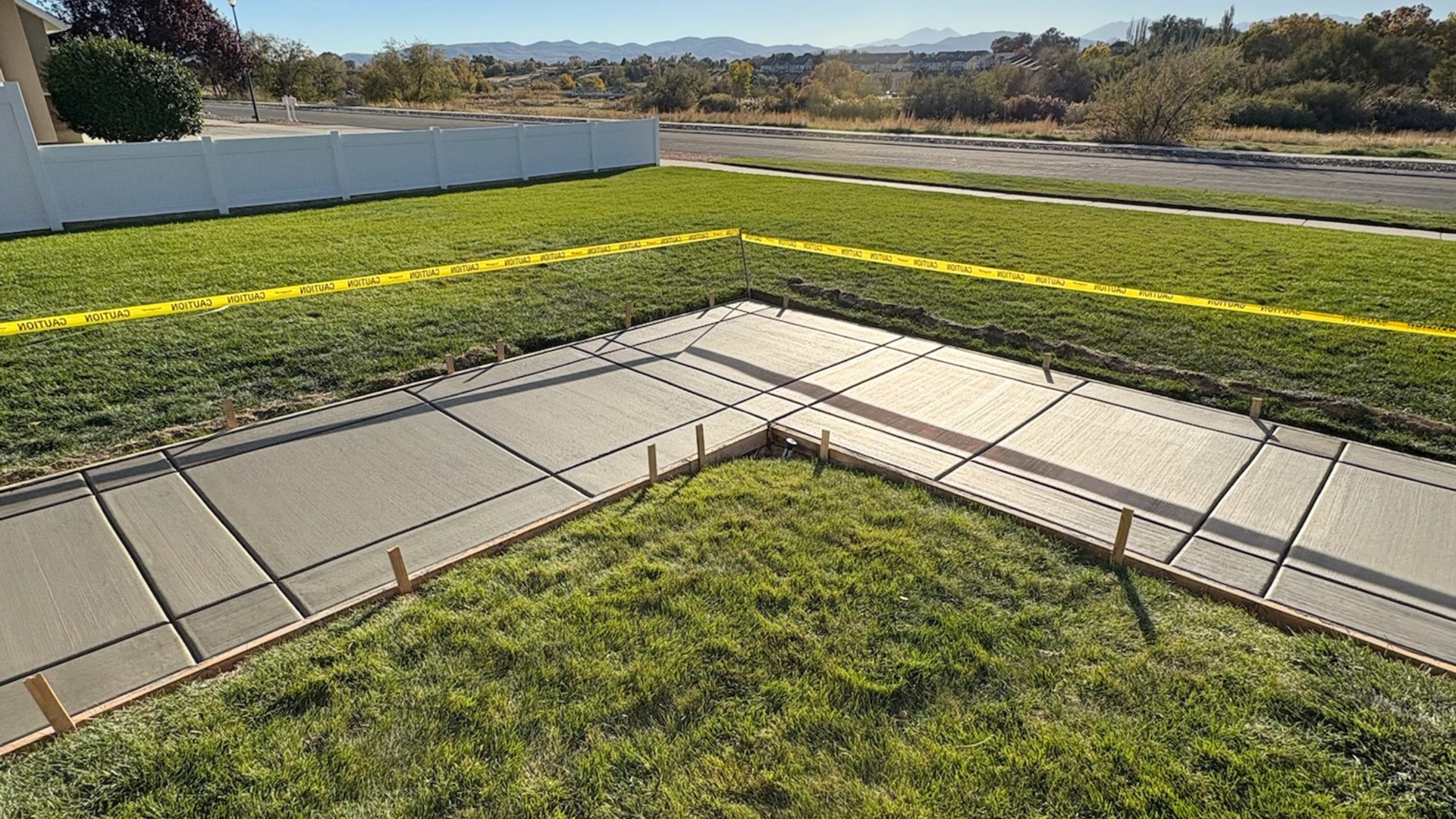
The answer is that it depends on what you are building and, more than anything, on whether your project touches the curb. A lot of standard flatwork in Syracuse does not need a building permit at all. But there is one specific situation that trips people up, and it is worth understanding before you break ground. Let's walk through it in plain terms, based on how the city actually handles this.
Concrete Permits in Syracuse: The Short Answer
For most residential flatwork, a flat driveway or a ground-level patio, you generally will not need a building permit in Syracuse. The city treats uncovered driveways and patios as exempt from the standard building permit process.
The moment that changes is when your project reaches the public curb or adds a roof. If you plan to cut the curb to widen your drive or add a new approach onto the street, that requires a separate curb cut permit from Public Works. Same goes for anything with a roof over it. So the real dividing line is not concrete versus no concrete. It comes down to two buckets: private, ground-level flatwork that usually needs no permit, and work that touches the city's right-of-way or adds a structure, which does. The rest of this guide sorts your project into the right bucket.
When You Do Not Need a Permit
Most everyday residential concrete falls here. If your project stays on your own property and has no roof over it, you are usually in the clear on the building permit side.
Flat Driveways on Your Own Property
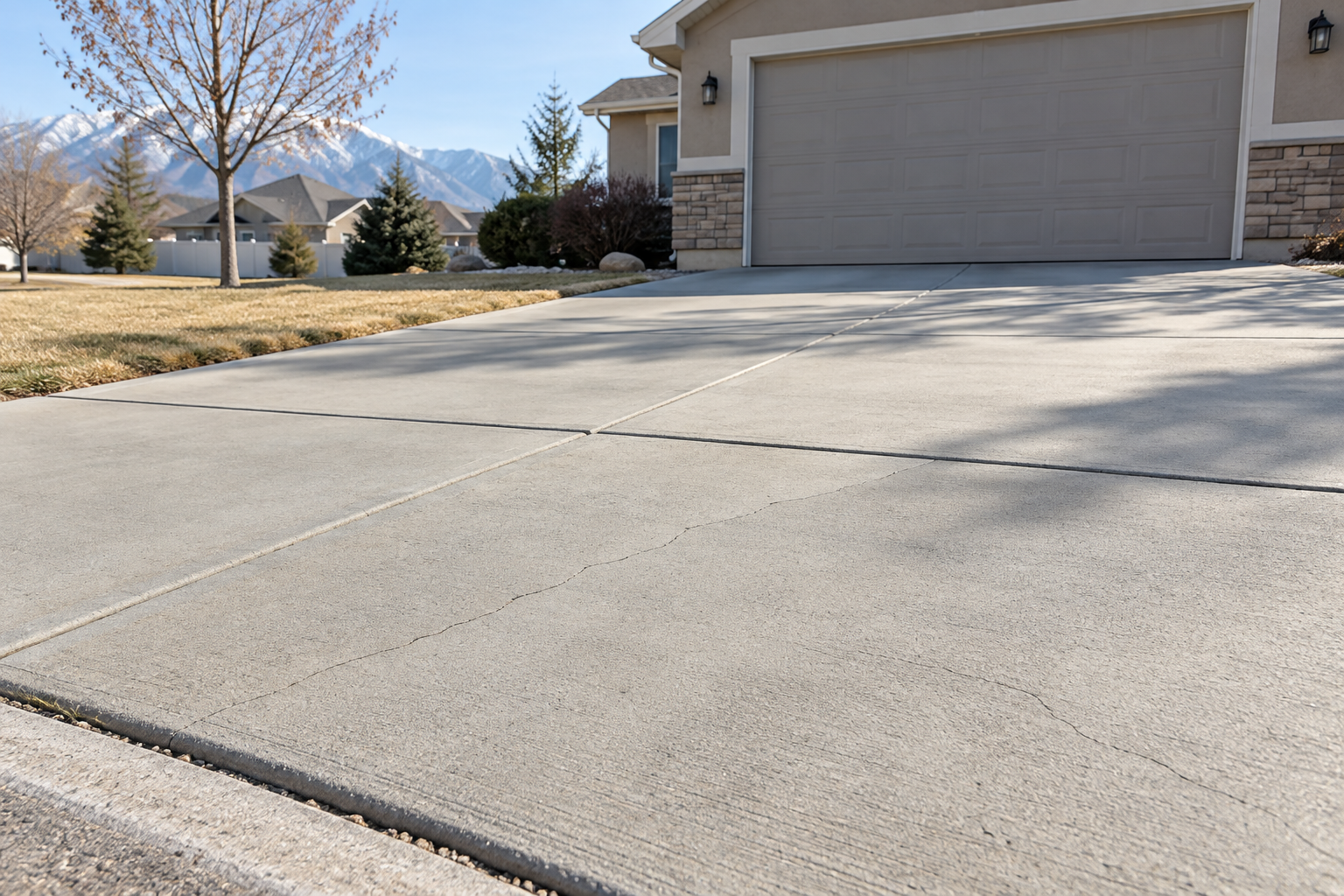
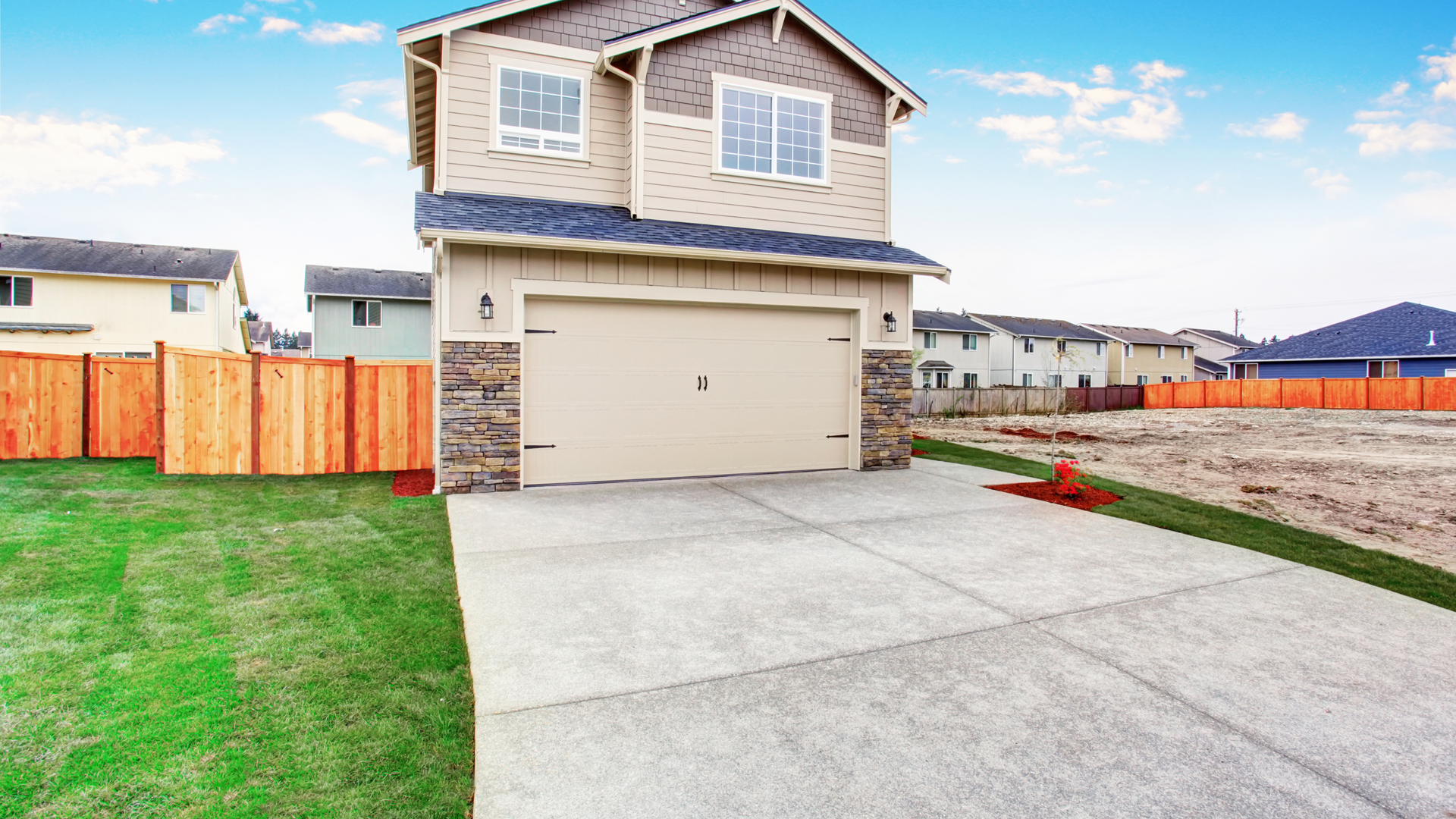
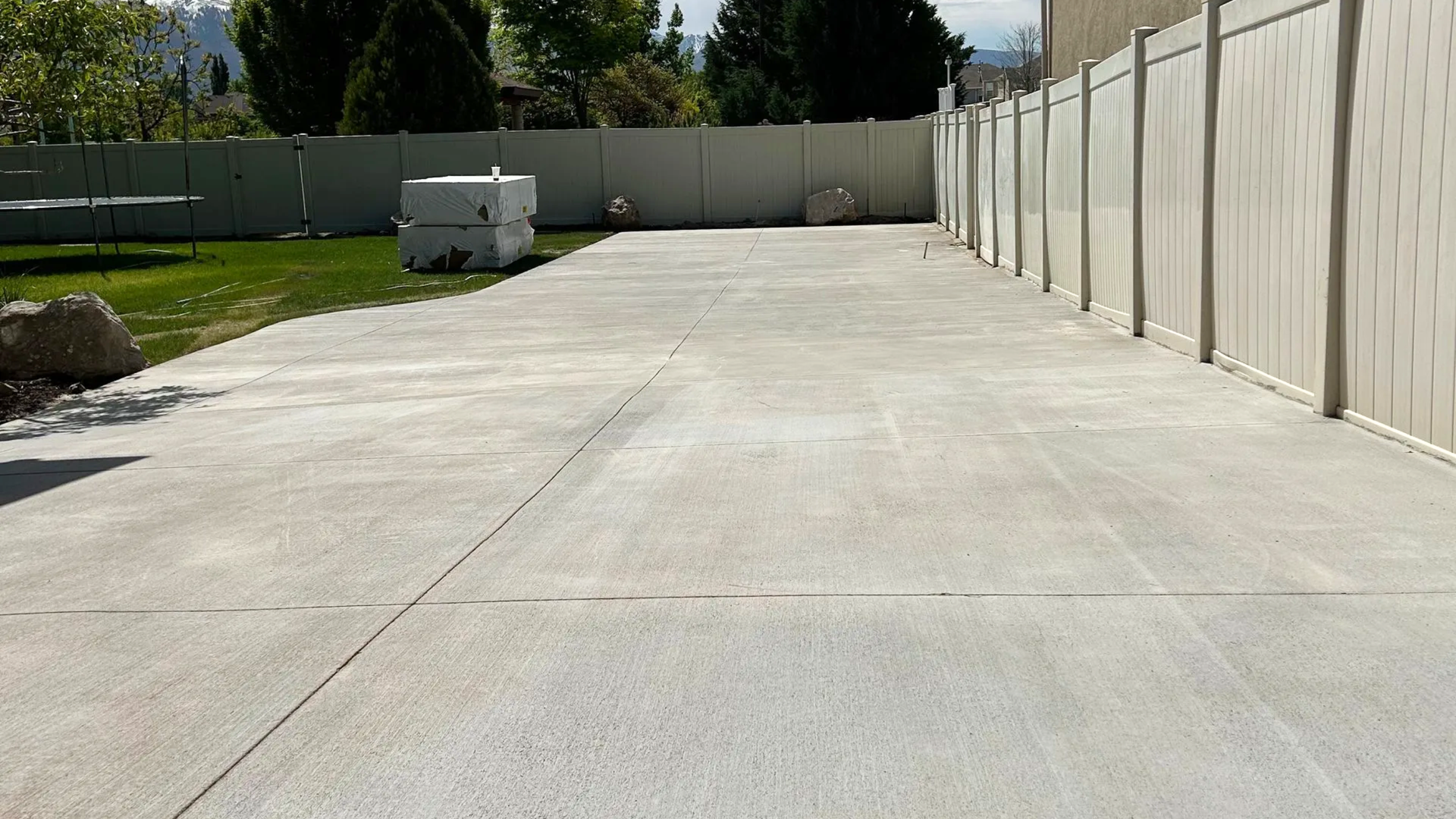
Pouring a standard driveway within your existing footprint on private property typically does not require a building permit in Syracuse. The city treats uncovered driveways as exempt. A straight replacement of an old driveway, or a new one that does not touch the curb or street, generally falls in this bucket. If you want to see what that build looks like start to finish, our step-by-step on how concrete driveway installation works walks through it.
Ground-Level Patios and Walkways
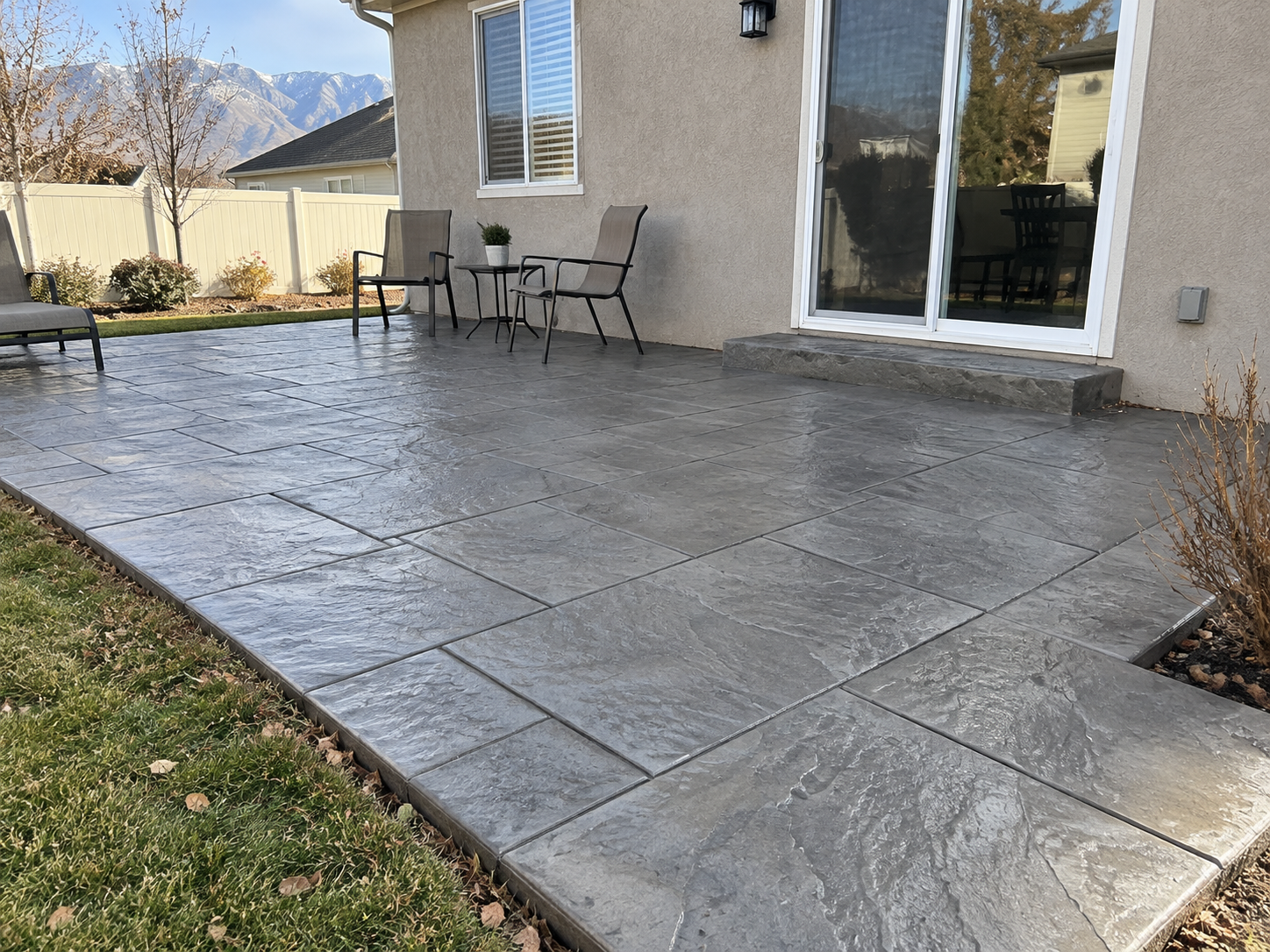
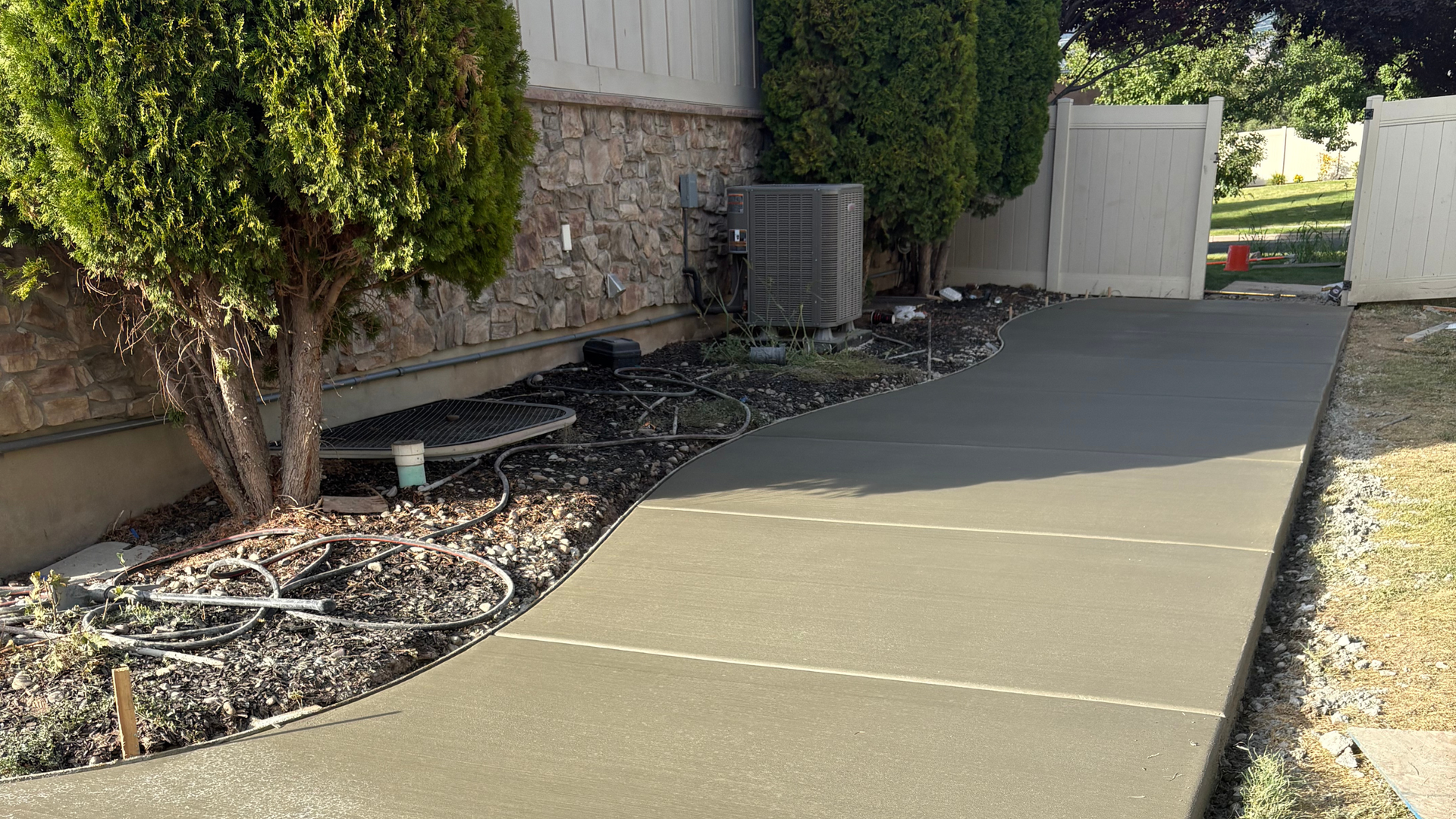
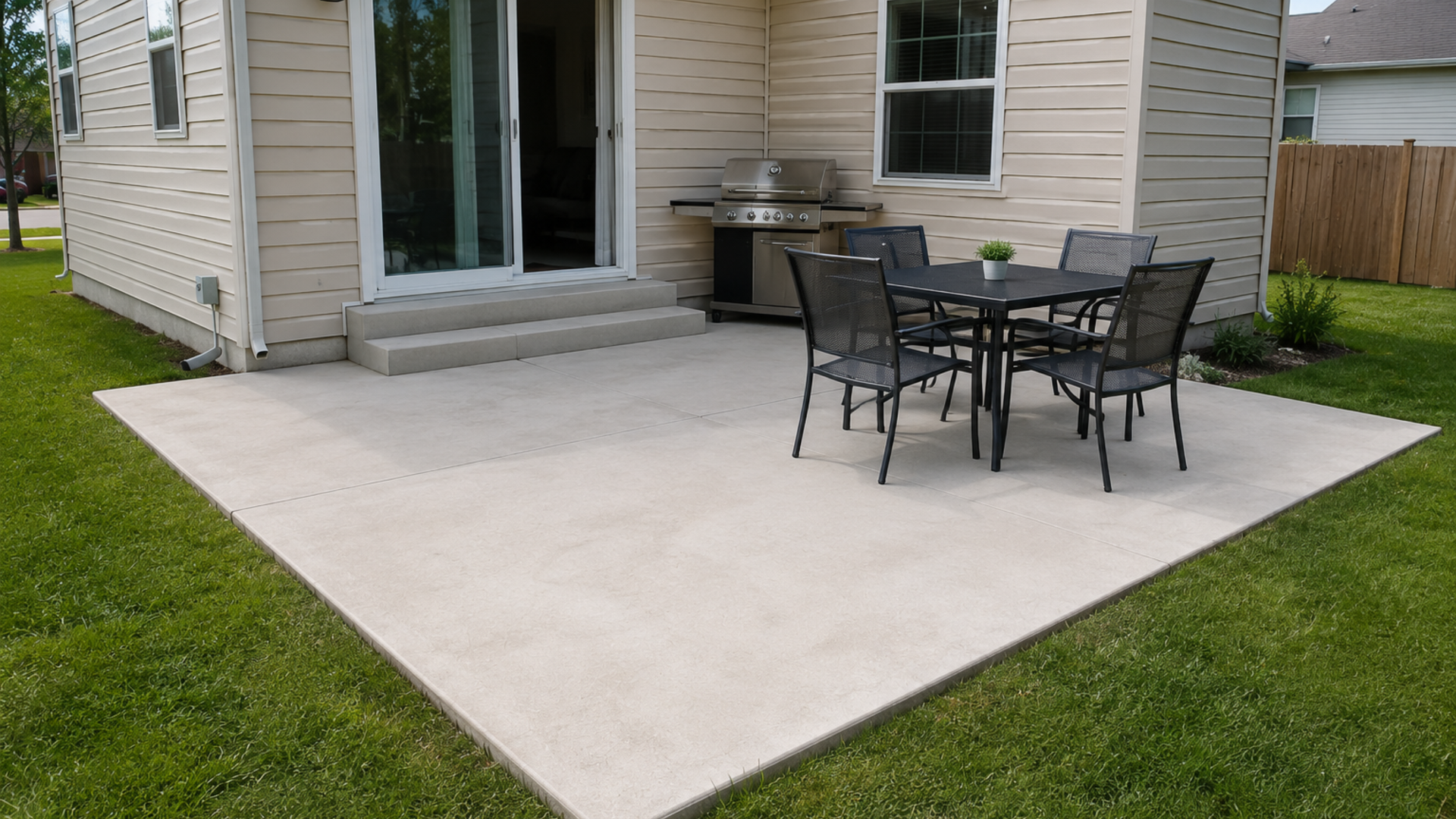
An open patio slab out back, with nothing built on top of it, is exempt too, and the same logic covers private sidewalks and walkways on your own property. Lay the slab, pour the walk, no building permit needed for the concrete itself. A simple backyard concrete patios pour is one of the most common projects that skips the permit entirely.
The Catch: Exempt Does Not Mean Unregulated
Here is the part worth underlining. Permit-exempt does not mean rule-free. Zoning setbacks still control how close a slab can sit to your property lines, even when no permit is pulled. So you can pour without a permit and still be out of compliance if the slab crowds a boundary. When in doubt, confirm the setback before you form up.
When You Do Need a Permit
The other bucket is work that either reaches into the public right-of-way or adds a structure. This is where a permit becomes non-negotiable, and it is easy to walk into without realizing it.
Cutting the Curb for a Driveway Approach
This is the big one, and the one people miss most. The curb, gutter, and driveway approach in front of your home sit in the public right-of-way, which the city controls, not you. The moment your project cuts that curb, whether to widen a drive or add a brand new approach, you need a curb cut permit from Syracuse City Public Works before work starts. The tricky part is that your driveway might be exempt while the approach connecting it to the street is not. If your new concrete driveway has to cross a curb that is currently solid, that crossing is the trigger.
Road Cuts and Excavation in the Street
Some projects go further and actually open up the street or right-of-way, for example to tie in a utility line or run drainage. That is a road cut, and Syracuse treats it more seriously than a simple approach. Excavation in the public right-of-way requires its own permit, and the requirements step up: the city requires an excavation bond to guarantee the street is restored, a valid Utah contractor license, and liability insurance of at least one million dollars per occurrence and two million aggregate with Syracuse City named as additional insured. Whoever does the work also stays responsible for maintaining the trench for a full year after the city approves it. Between the bonding and the insurance, this is well outside DIY territory.
Roofed Structures and Patio Covers
Add a roof and the rules change. The patio exemption applies to open, ground-level slabs only. Put a patio cover, a solid-top pergola, or any structure over that slab, and the roofed portion moves back into building permit territory. Syracuse has adopted the 2021 International Residential Code, and roofed structures fall under it. So a bare patio might be exempt while the cover you want over it is not.
A Quick Way to Tell Which Bucket You Are In
If you are not sure, run your project through two questions.
First: does it touch the curb, gutter, sidewalk, or street? If yes, you are in right-of-way territory and need a Public Works permit. Second: does it have a roof or structure on it? If yes, you need a building permit for that part. If the answer to both is no and the slab respects your setbacks, you are very likely in the no-permit bucket. When either answer is a maybe, it is worth a quick call before you pour.
The Curb Cut Permit, Explained
Because the curb cut is the permit most concrete projects actually run into, it is worth understanding in detail. It is not complicated, but it has specific requirements, and missing one can slow you down.
What Syracuse City Requires From You
When you apply for a curb cut permit through Public Works, the city asks for a few concrete things. You will need a sketch of the proposed project showing what you intend to build. You will need a Certificate of Liability Insurance from the company doing the work, and that certificate has to list Syracuse City as the certificate holder and stay valid through the completion of the job.
There are also placement rules. The total length of your curb cut cannot exceed half the total length of your property frontage, and the cut has to sit at least two feet in from your property pin. Those limits exist to keep driveways from swallowing the whole street frontage and to protect drainage and the neighbor's side. A contractor who pulls these permits regularly will design your approach to fit inside those rules from the start, which saves a round of corrections.
The Approach Spec: Why Depth Matters
Syracuse does not just care that you cut the curb. It cares how the approach is built. The city's spec calls for digging down 14 inches to allow for 8 inches of compacted road base or crushed gravel topped by 6 inches of concrete. That is a real structural standard, not a formality.
The reason is load and longevity. The approach is where vehicles cross from the street onto your property, so it takes more abuse than the middle of a driveway. A properly compacted base under a full six inches of concrete is what keeps that section from cracking and settling under repeated wheel loads. This is the same principle behind getting the base right on any pour, which we cover in more depth in our guide on concrete driveway thickness and reinforcement. Build the approach to spec and it lasts. Cut corners on the base and it fails early, permit or not.
Sidewalks and Walkways: Who Is Responsible in Syracuse?
Sidewalks confuse a lot of homeowners, and for good reason. The sidewalk in front of your house sits in the public right-of-way, so people assume the city owns the upkeep. In Syracuse, that assumption is mostly backwards, and it matters for both permits and liability.
What the City Handles and What Falls to You
Under Syracuse's municipal code, the owner or occupant of a property has a duty to keep the area between their property line and the curb in good order. That area explicitly includes the sidewalk and the park strip between the street and the sidewalk. In plain terms, the strip in front of your home is your responsibility to maintain, even though it is technically public right-of-way.
That covers day-to-day upkeep, and it covers snow. Like most Utah cities, Syracuse expects the adjacent property owner to clear snow and ice from the public sidewalk within a reasonable window after a storm, typically around 24 hours. Code Enforcement handles complaints about sidewalks that are not cleared or not maintained. What the city does not do is quietly take that burden off your plate the way some larger cities have with paid sidewalk programs. In Syracuse, the responsibility stays with the property owner.
Where a permit comes in is construction. If you are installing new walkways on your own property, that private flatwork usually follows the same exempt logic as a private patio. But if the work touches the public sidewalk, curb, or gutter, you are back in right-of-way territory and need to clear it with Public Works first, the same as a curb cut.
Trip Hazards and Property Owner Liability
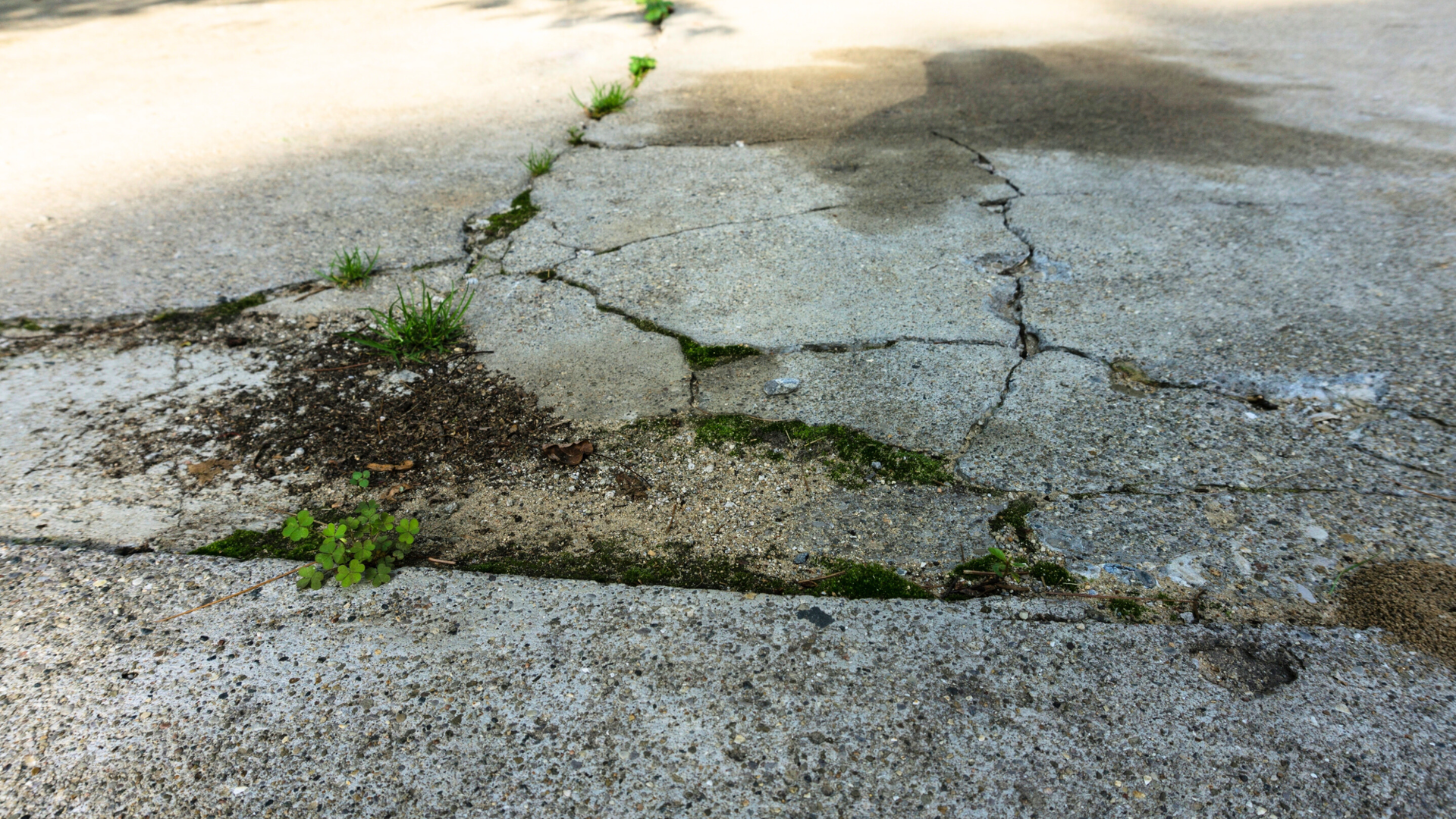
The maintenance duty has a sharper edge that homeowners often overlook: liability. Because you are responsible for the condition of the walk in front of your home, a cracked, heaved, or uneven sidewalk that causes someone to trip and fall can become your problem, not just the city's. Utah's freeze-thaw cycle is hard on flatwork, and slabs that lift or crack at the joints are exactly the kind of trip hazard that leads to injury claims.
This is one of the quieter reasons to keep sidewalks and approaches in good repair and to have them built correctly in the first place. A walk poured to proper thickness on a compacted base, with clean joints and good drainage, resists the heaving that creates hazards. A cheap pour that lifts within a couple of winters can turn into both a safety issue and a liability exposure. Keeping that concrete sound is not just about curb appeal. It is about not being the property owner whose sidewalk sent someone to urgent care.
How the Permit Process Actually Works
Knowing a permit exists is one thing. Knowing how to get through it without wasting weeks is another. Here is the practical version.
Who to Call and What to Submit
For a curb cut or anything touching the driveway approach, your point of contact is Syracuse City Public Works. For anything involving a structure, an addition, or a roofed cover, that goes through the Syracuse City Building Department instead. Getting to the right desk first is half the battle, because sending a curb cut question to the building counter, or vice versa, just adds delay.
What you submit depends on the project, but for a curb cut it comes down to that project sketch and the insurance certificate naming the city. Have both ready and the application moves. If you are working with a contractor, they typically handle this submission as part of the job, which means you are not the one making trips to city hall or chasing down insurance paperwork.
Site Drawings, Setbacks, and Inspection Timing
Most applications want a drawing. For a curb cut it is the project sketch showing your proposed approach; for anything involving a structure, the city asks for a site plan drawn to scale that shows your lot dimensions, existing and proposed structures, driveway locations, and utility easements. The point of the drawing is to let the city confirm your project fits the rules before you build, not after.
Setbacks are part of what that drawing proves. Even permit-exempt flatwork has to respect zoning setbacks that dictate how close a slab or structure can sit to your property lines, and a roofed cover has its own setback requirements on top of that. Getting the setbacks right on paper is what keeps a project from being flagged mid-build.
Then comes inspection. Permitted work gets inspected, and for a driveway approach that can mean the city checks the excavation and base before the pour and the finished work afterward, confirming the depth and build match what was approved. Timing depends on how busy the city is and how complete your application is, which is exactly why the spring and summer rush is worth planning around. If you are timing a project anyway, our guide on the best time of year to pour concrete in Utah pairs well with this, since permit queues and pour conditions both reward planning ahead rather than scrambling.
Why This Is Easier With a Local Contractor
You can absolutely navigate Syracuse's permitting yourself, and for a simple exempt patio there may be nothing to navigate. But the reason most homeowners hand this off is that a local contractor already knows the answers. They know a flat driveway is exempt but the curb cut is not. They know the approach spec off the top of their head. They know to list the city on the insurance certificate the first time, and they know which department to call.
That local knowledge is not just convenience. It is the difference between a project that moves and one that stalls on a technicality. A crew that pours across Davis County week in and week out has run this process many times, on sidewalks and walkways, driveways, and approaches, and they build to the city's standards by habit. If you want to understand what the actual build looks like once permits are handled, our step-by-step on how concrete driveway installation works walks through it.
Frequently Asked Questions
Do you need a permit for a concrete driveway in Syracuse, Utah?
In most cases, a flat concrete driveway or patio without a roof does not need a building permit in Syracuse, Utah. The catch is the curb. If your project involves cutting the curb to extend a driveway or add an approach onto the public street, you need a separate curb cut permit from the Public Works Department before any work begins.
What is a curb cut permit and when do I need one?
A curb cut permit lets you cut the existing curb along your property line to widen a drive or add a new approach onto the street. Syracuse City requires it whenever you alter the public curb, gutter, or driveway approach. Applying involves a project sketch and a Certificate of Liability Insurance from your contractor that lists Syracuse City as the certificate holder.
Do I need a permit for a concrete patio in Syracuse, Utah?
A ground-level concrete patio with no roof over it is generally exempt from a building permit in Syracuse. However, if you add a patio cover or any roofed structure, that part of the project does require a building permit, and zoning setbacks still apply to where the slab can go.
Who do I contact for a concrete permit in Syracuse, Utah?
For curb cuts and driveway approaches, contact Syracuse City Public Works. For anything involving a structure, addition, or roofed cover, contact the Syracuse City Building Department. A local concrete contractor who works in Davis County regularly can also tell you upfront which permits your specific project needs.
Who is responsible for the sidewalk in front of my house in Syracuse, Utah?
In Syracuse, Utah, the property owner or occupant is responsible for maintaining the area between their property line and the curb, including the public sidewalk and the park strip. That includes keeping it in good repair and clearing snow and ice after a storm. Unlike some larger cities, Syracuse does not run a paid program that takes this duty off the owner.
What happens if I pour concrete without a required permit?
Skipping a required permit, especially a curb cut or road cut in the public right-of-way, can lead to stop-work orders, fines, or being told to tear out and redo the work. It can also cause problems when you sell the home. Confirming permits before the pour is far cheaper than fixing an unpermitted project later.
Get Your Syracuse Concrete Project Started Right
So, do you need a permit for concrete work in Syracuse, Utah? For a plain driveway or patio, often not. For anything that cuts the curb or adds a roof, yes, and it pays to handle that correctly before the first truck arrives. The rules are not hard once you know where the lines fall, but they are easy to trip over if you do not.
At Northmen Concrete, we work across Syracuse and Davis County every week, so we know which permits your project needs and how to build to the city's standards from the base up. We can tell you in one conversation whether your project is exempt or needs a curb cut, and we handle the paperwork as part of the job. Request a free estimate and we will map out exactly what your project takes, permits included.