What Stamped and Colored Concrete Actually Is
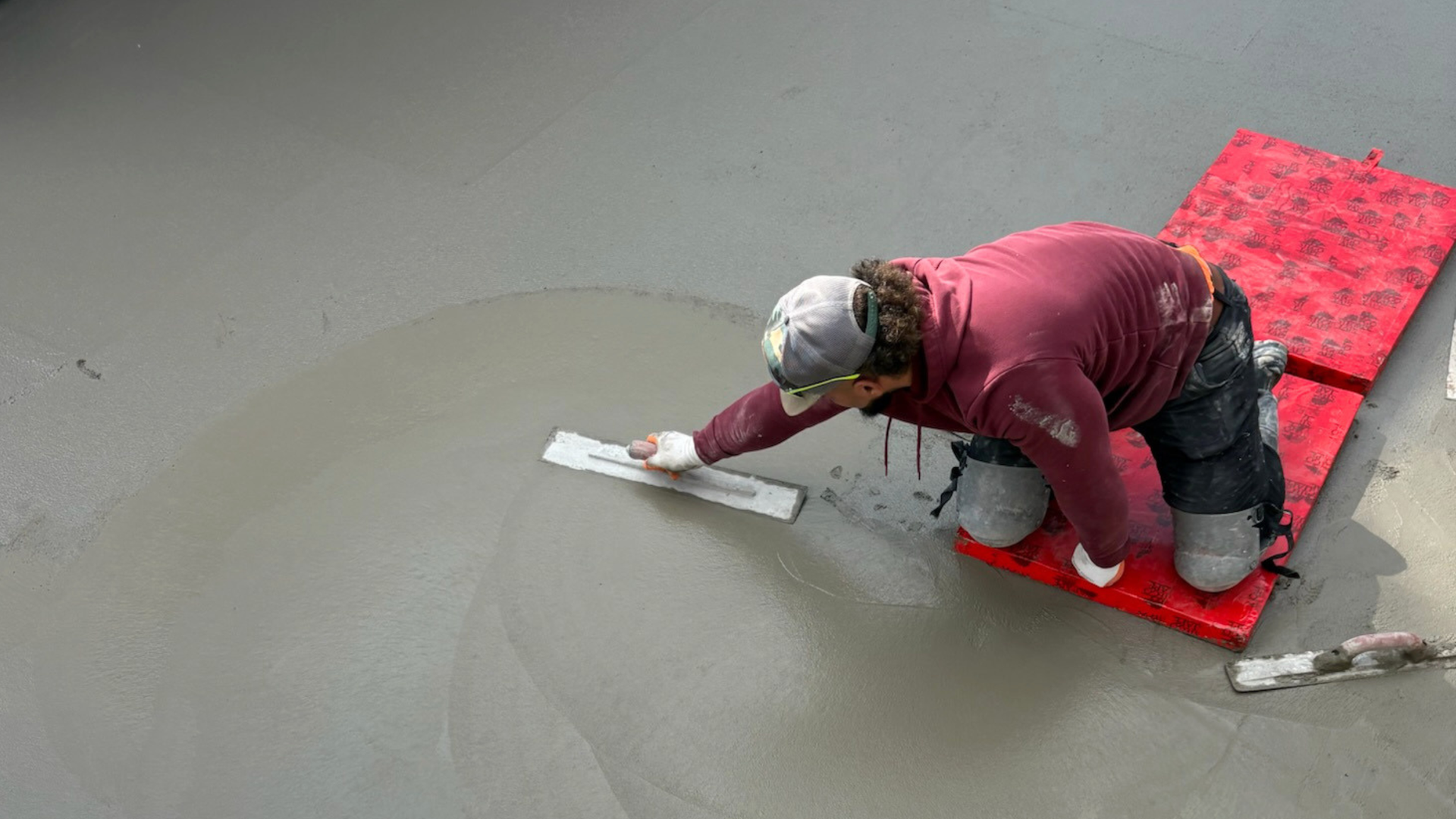
Stamped concrete is poured like any slab, then imprinted with textured mats while it is still fresh to create a pattern that mimics natural materials. Color is added separately, either mixed into the concrete or applied to the surface, so the two techniques are usually combined for a realistic finish.
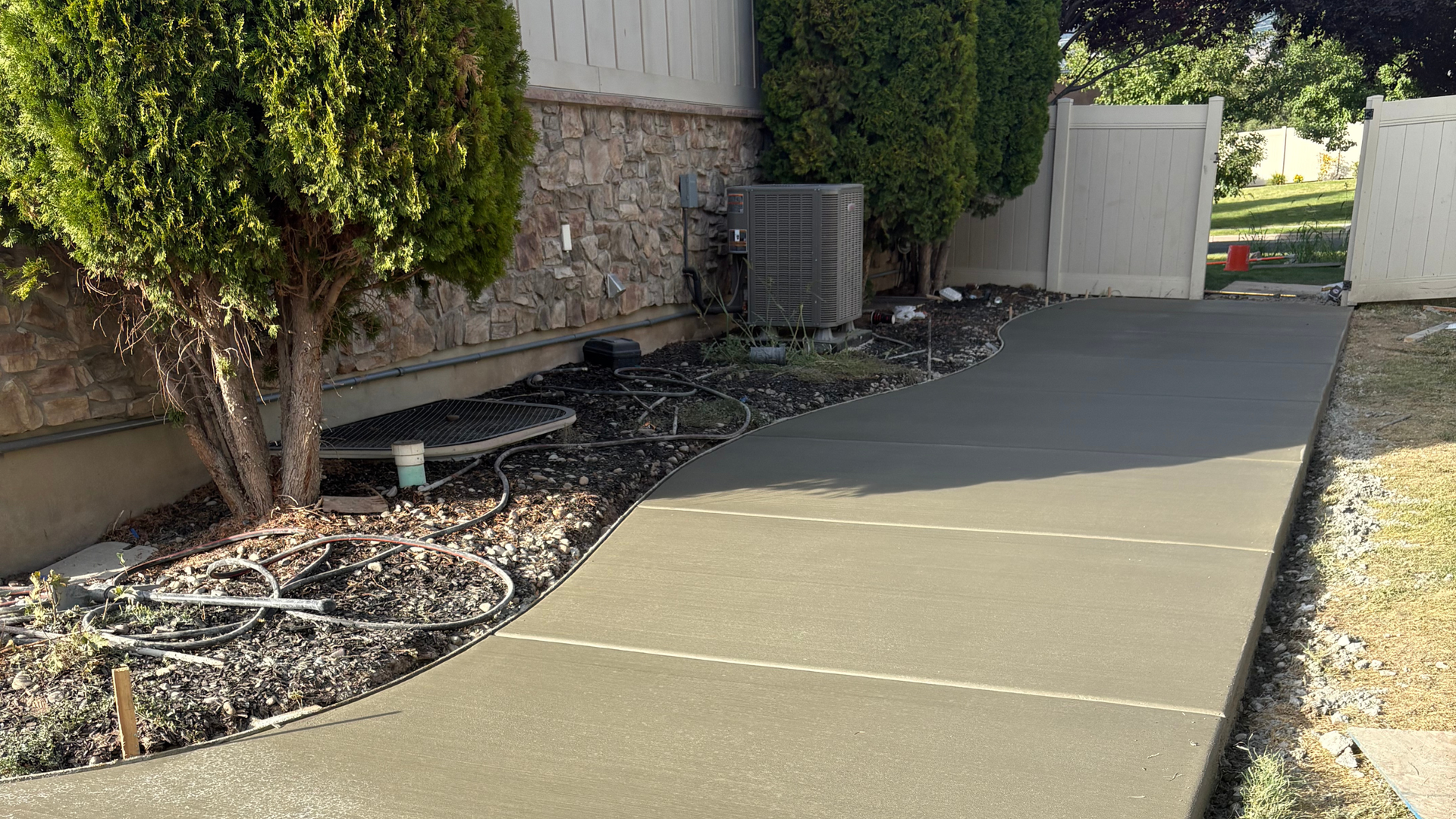
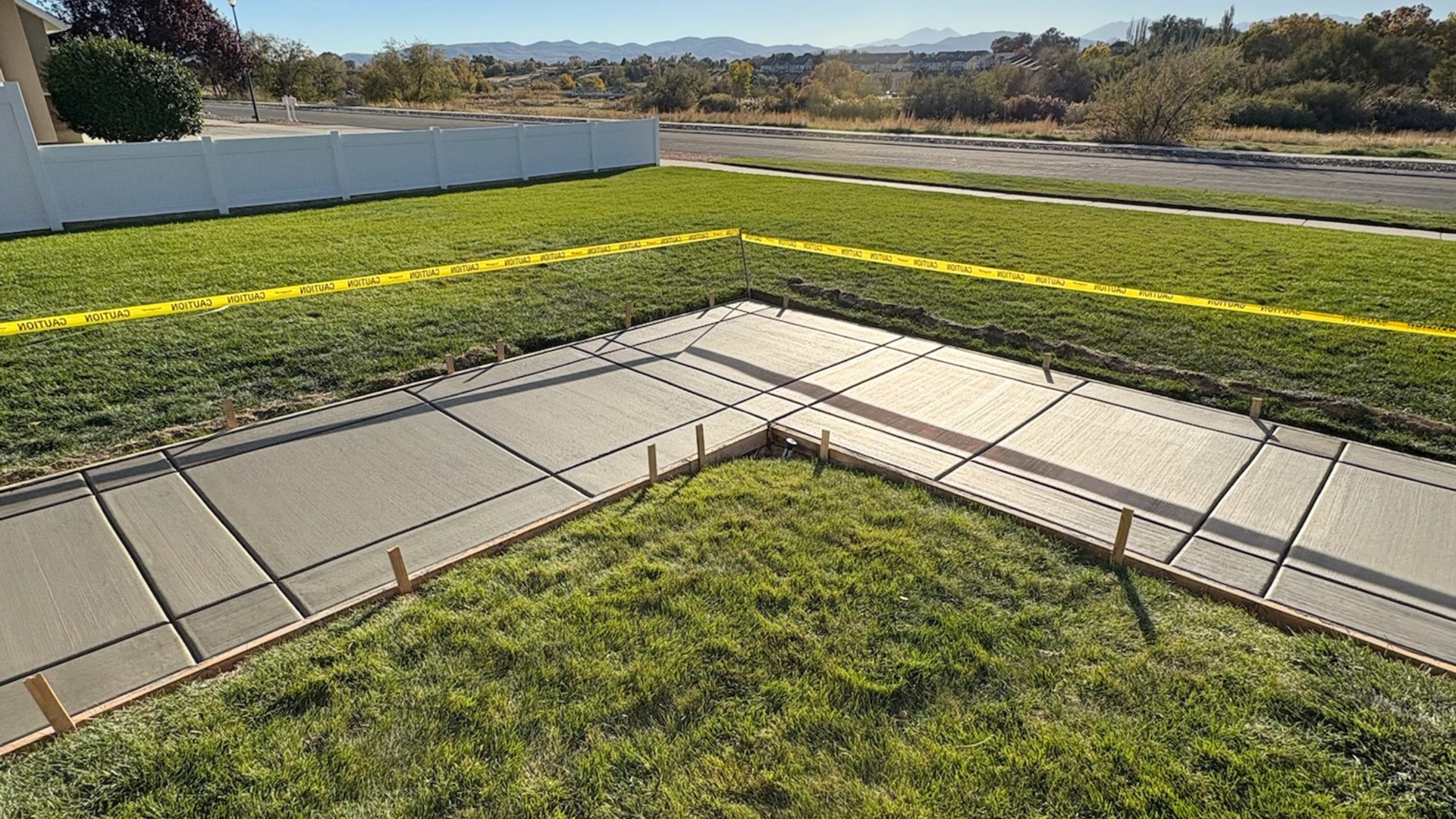
The result is a continuous surface with no joints to shift or weeds to grow through, unlike pavers. It works for patios,
walkways, pool decks, and entryways, and it pairs naturally with matching
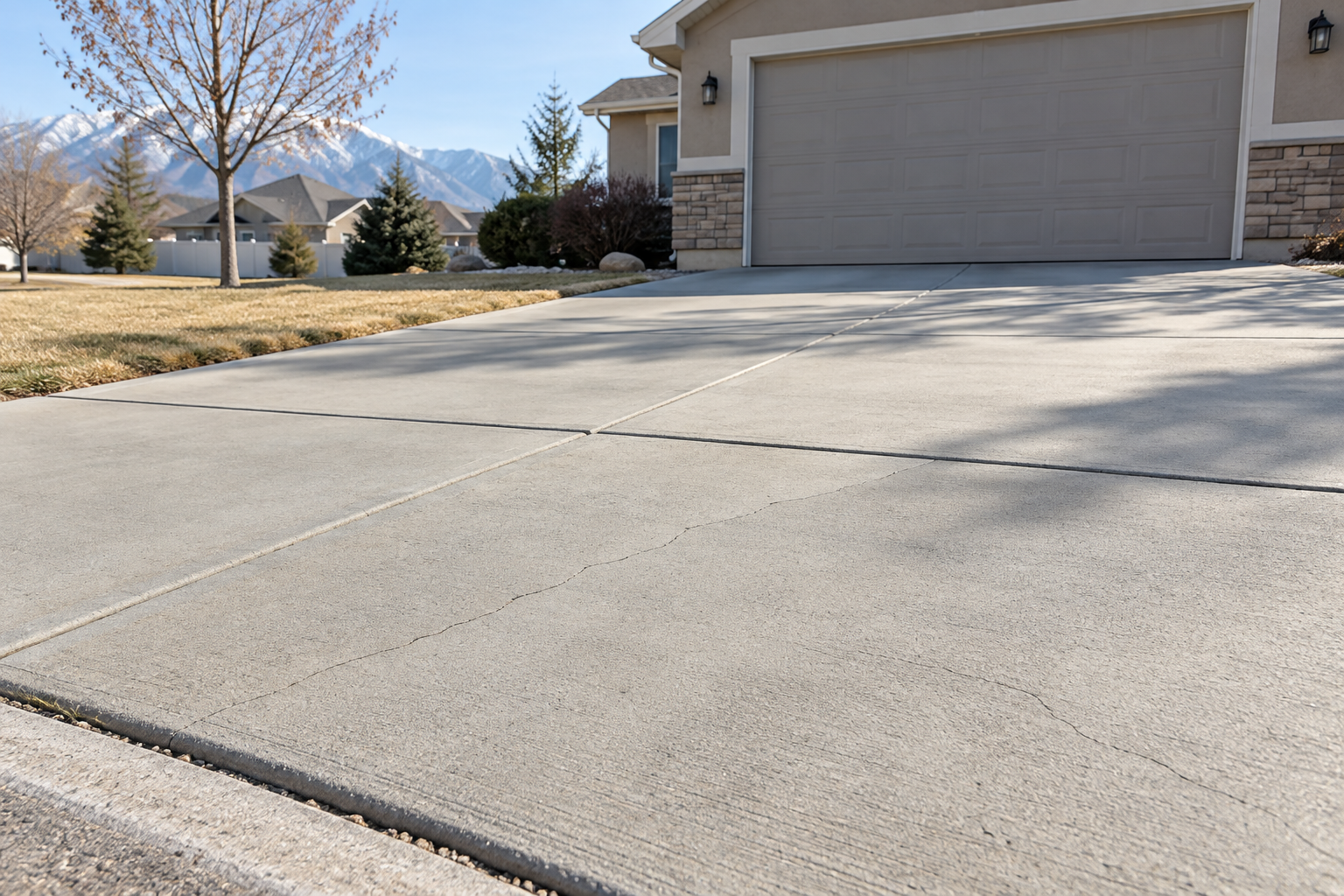
concrete patios or a coordinated driveway. Done well, it is hard to tell from the material it imitates.
Popular Stamped Patterns
The pattern sets the whole look, and the choices run from rustic to refined. The most common patterns we install are:
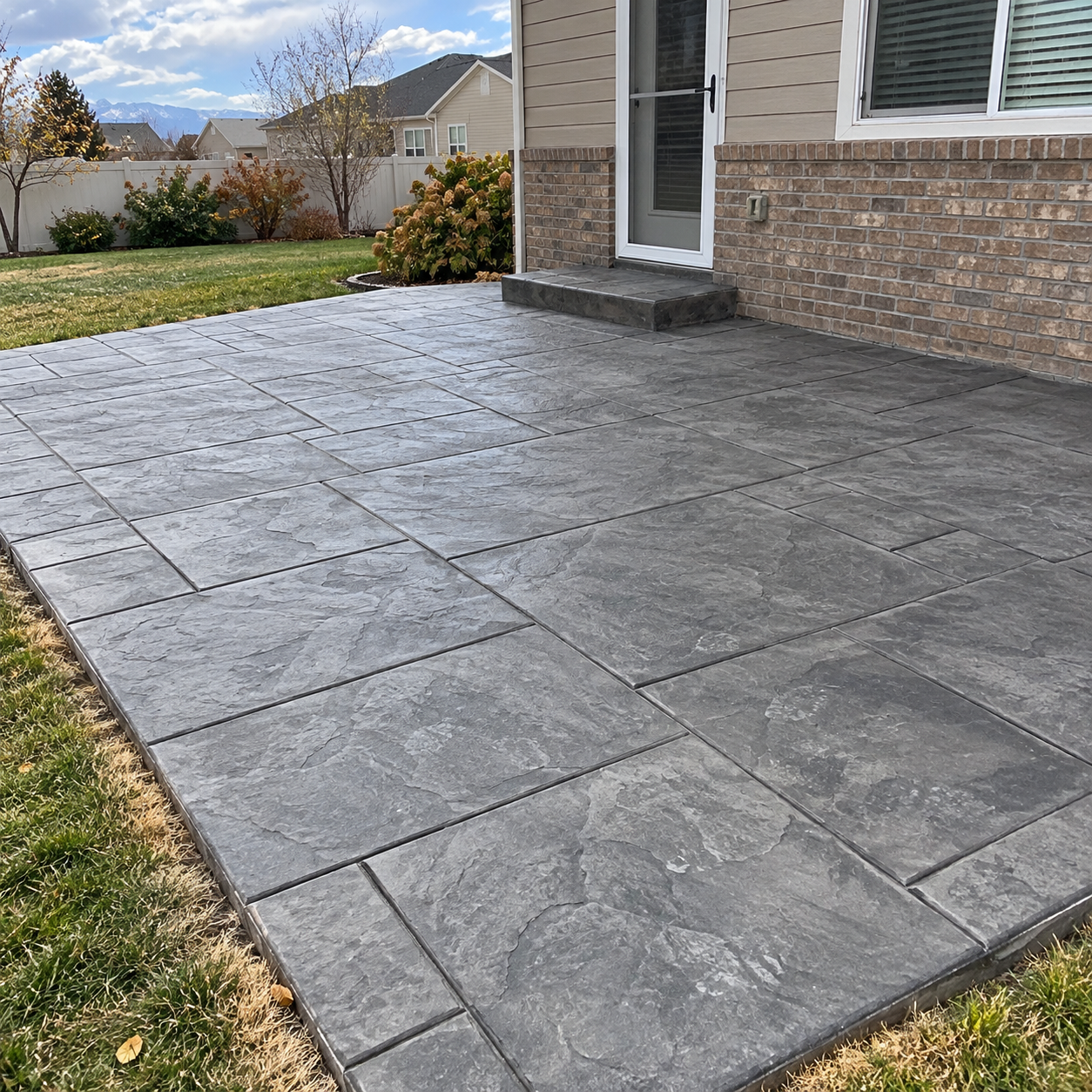
- Slate. A clean, textured look that suits modern and traditional homes alike. One of the most popular choices.
- Flagstone.
An irregular, natural stone look with organic shapes and joints.
- Ashlar.
Cut-stone rectangles in a tidy, geometric layout for a formal feel.
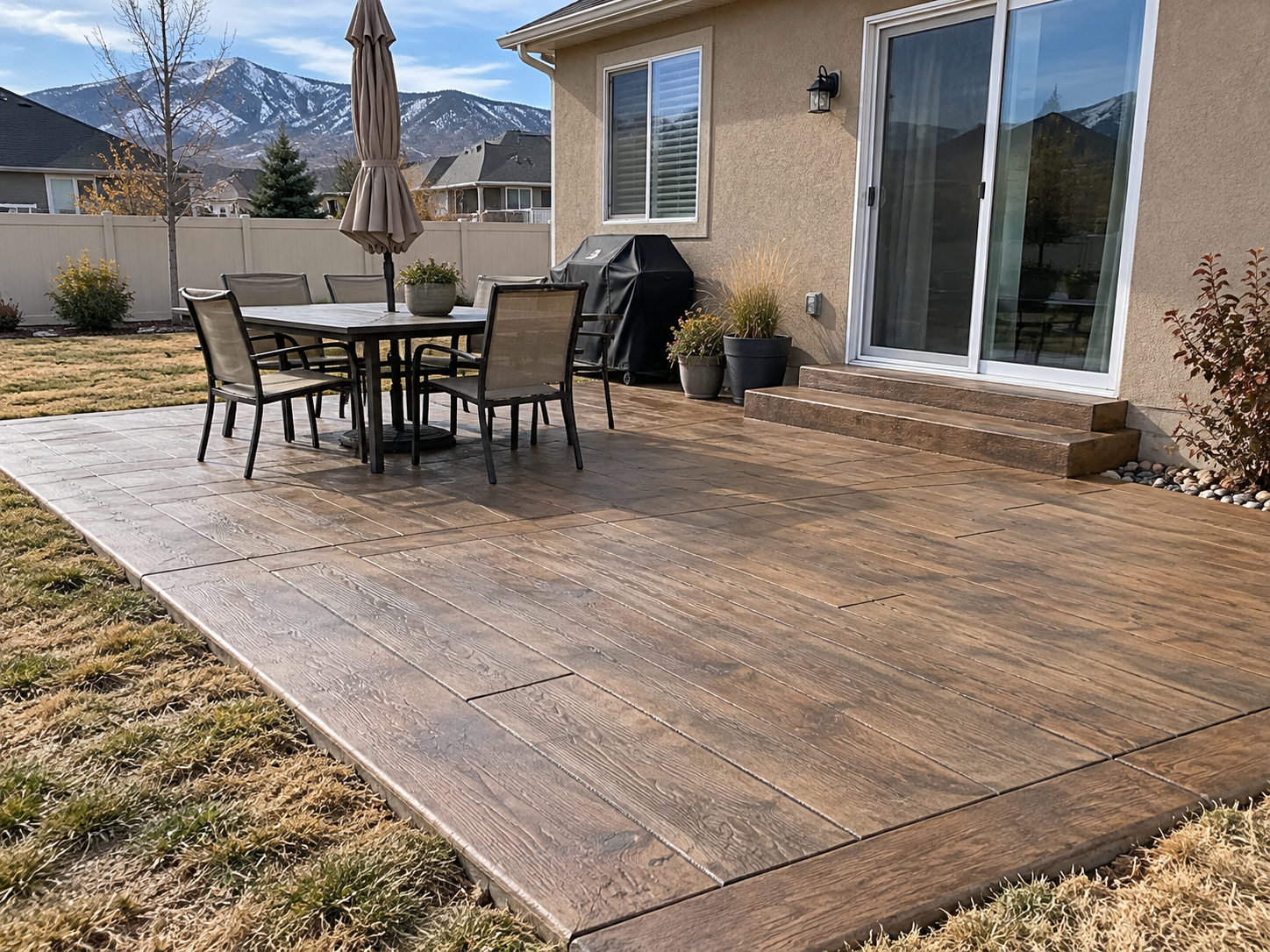
- Wood plank. Realistic wood-grain texture, ideal for a patio that reads like a deck without the upkeep.
- Cobblestone. Old-world rounded stones, good for borders and accents.
- Brick. Classic running-bond or herringbone brick patterns for walkways and edges.
Patterns can also be mixed for a custom result. A common approach sets one field pattern inside a contrasting border, which frames a patio and makes the space feel designed rather than poured.
How Colored Concrete Is Done
Color is what makes a stamped pattern believable. There are a few ways to add it, and they are often layered together for depth.
Integral Color
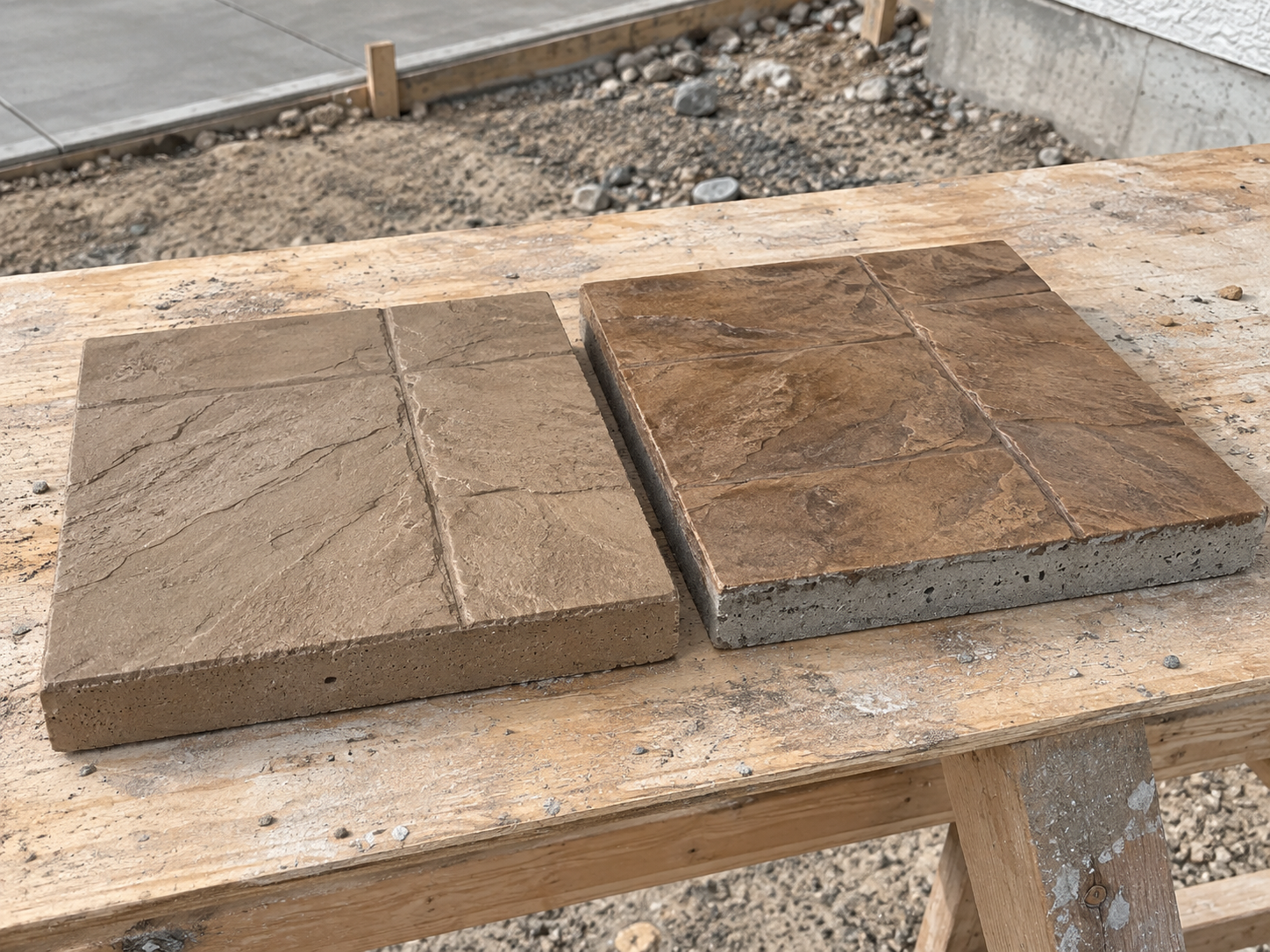
Integral color is mixed into the concrete before it is poured, so the color runs all the way through the slab. Because it is not just on the surface, it holds up well over time and will not wear away or chip to reveal gray underneath. It gives a consistent base color across the whole pour.
Color Hardener
Color hardener is broadcast onto the surface of the fresh concrete and worked in. It produces a richer, more intense color than integral color and also hardens the top layer, which improves wear resistance. Many installs use integral color for the base and a hardener for a stronger surface tone.
Antiquing Release and Stains
Release agents do double duty. They keep the stamps from sticking to the concrete and leave behind a secondary accent color that settles into the texture, which creates the natural variation real stone has. Acid or water-based stains can be added later for more depth or to adjust the tone. Layering these is what separates a flat, fake-looking slab from one that convincingly reads as stone.
What Stamped and Colored Concrete Costs
Pricing depends on the pattern complexity, the number of colors, the site, and the size of the pour. A basic broom finish is the cheapest option, while multi-color stamped work with custom borders sits at the top. The ranges above give you a general sense of 2026 costs in the Davis County area. For a custom, accurate price on your specific project, contact us for a free estimate, since every site and design is different.
Sealing: The Key to Surviving Utah Freeze-Thaw
Here is the part that matters most for keeping decorative concrete looking good in our area. Sealing is not optional maintenance on stamped concrete in Utah, it is the single thing that protects your investment.
Why Sealing Matters Here
The Wasatch Front goes through roughly 50 to 80 freeze-thaw cycles a year. Water soaks into unsealed concrete, freezes, expands, and chips away at the surface, which is called spalling. A quality sealer keeps that water from penetrating in the first place, so it protects both the color and the surface texture from fading and wear.
Sealing also deepens the color and gives stamped concrete its finished sheen. On a decorative surface, where the whole point is how it looks, letting the sealer lapse is the fastest way to lose that look. The same freeze-thaw forces behind faded sealer are what drive cracking in any slab, which we cover in our guide on
why concrete cracks in Utah.
How Often to Reseal
Plan to reseal stamped concrete every two to three years, at a cost of around $1.50 per square foot. That is a modest, predictable expense that pays for itself by extending the life of the surface for decades. Skipping it is where people run into faded color and spalling far sooner than they should.
A few sealing tips for our climate:
- Reseal before winter when possible, so the surface is protected going into the freeze-thaw season.
- Ask for a non-slip additive in the sealer for walkways and pool decks, since a smooth sealed surface can get slick when wet or icy.
- Keep the surface clean and reapply on schedule rather than waiting for visible wear, which is harder to recover from.
Is Stamped Concrete Right for Your Project?
Stamped and colored concrete is a strong choice for a lot of homes, but it fits some situations better than others. It tends to make sense when:
- You want the look of stone, brick, or wood at a lower cost than those materials.
- You prefer a continuous surface with no joints for weeds or shifting pavers.
- You are willing to keep up with resealing every few years to protect the finish.
- You are building a patio, walkway, pool deck, or entry where appearance matters.
If low maintenance is your top priority and you do not want to reseal, a standard finish or pavers may suit you better. An honest contractor will tell you which fits your goals rather than upselling the fanciest option. For the science behind sealing and freeze-thaw durable concrete, the
Portland Cement Association on decorative concrete and the
American Concrete Institute are good non-commercial references.
Frequently Asked Questions
Is stamped concrete slippery in winter?
A smooth, sealed stamped surface can get slick when wet or icy. The fix is to add a non-slip additive to the sealer, which blends in and gives the surface grip without changing the look. It is worth asking for on any walkway or patio that sees winter use in Utah.
Can you change the color of existing stamped concrete?
Yes, within limits. Existing stamped concrete can often be re-stained or tinted during resealing to refresh or shift the color. A dramatic change is harder than picking the right color up front, so it is best to get the base color right at installation.
How long does stamped concrete last in Utah?
Well-installed stamped concrete on a proper base can last for decades. Its lifespan depends heavily on upkeep, since keeping it sealed is what protects the color and the surface from our freeze-thaw cycles. Neglected sealing is the main reason a decorative surface wears out early.
Can I reseal stamped concrete myself?
A homeowner can reseal with a compatible product, but surface prep and using the correct sealer matter a lot. The wrong sealer or a dirty surface can cloud, peel, or trap moisture. Many owners have a contractor handle it to keep the finish and warranty intact.
Is stamped concrete cheaper than pavers?
Usually yes. Stamped concrete typically costs less per square foot than a comparable paver installation, while still giving the look of stone or brick. Pavers have their own advantages, but for the decorative look at a lower price, stamped concrete is the common choice.
Get a Stamped Concrete Quote in Davis County
Stamped and colored concrete gives you a custom, high-end outdoor surface at a fraction of the cost of natural stone, as long as it is built on a solid base and sealed for our climate. The pattern and color set the look, but the sealing routine is what keeps that look through Utah winters.
At Northmen Concrete, we design and pour
stamped and colored concrete across Syracuse and Davis County, with the base prep and sealing guidance to keep it beautiful for the long haul. Whether you have a pattern in mind or just want to see your options, we are glad to walk you through them.
Request a free estimate and let's design a surface you will be proud of.
REQUEST A FREE ESTIMATE
CALL US NOW