Concrete Walkways & Sidewalks in Syracuse: Cost, Design & Permits
If you are pricing out a new concrete walkway or sidewalk in Syracuse, the first thing you want is a straight answer on cost, and the second is confidence that the walk will actually hold up to Utah winters. This guide covers both. We will break down what a concrete walkway costs in the Syracuse and Davis County area in 2026, what makes one quote higher than another, how to build a walk that survives our freeze-thaw cycles, the design and safety choices worth knowing, and when a tired old walkway is better repaired than replaced.
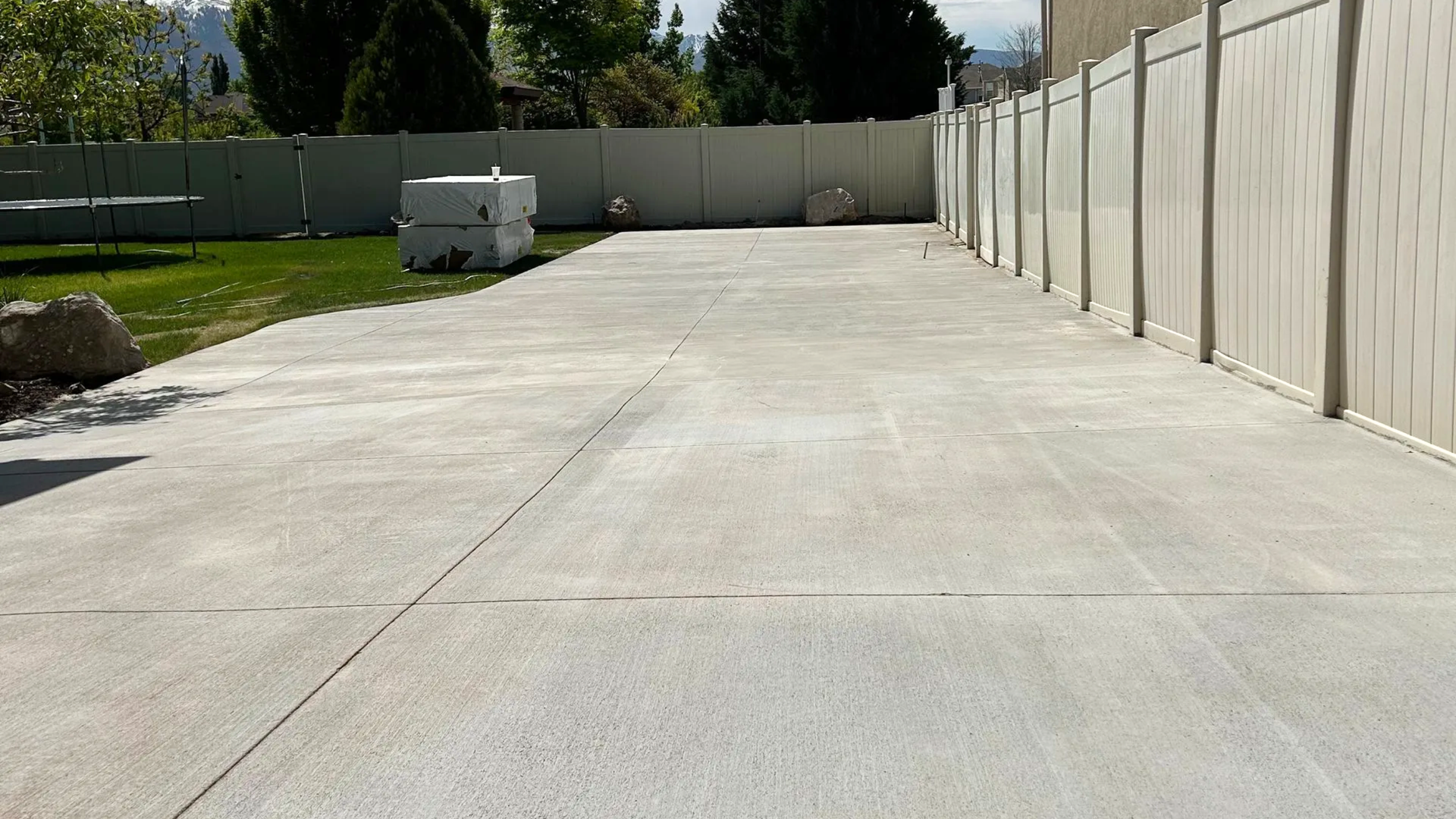
Concrete is still the workhorse of residential flatwork here for good reason. It is affordable, it is durable when it is built right, and it handles everything from a front entry path to a full run of
sidewalks and walkways around the house. The key phrase is built right, because in this climate the difference between a walk that lasts thirty years and one that cracks in three comes down to what happens below the surface. Let's start with the numbers.
What Does a Concrete Walkway Cost in Syracuse? (2026 Pricing)
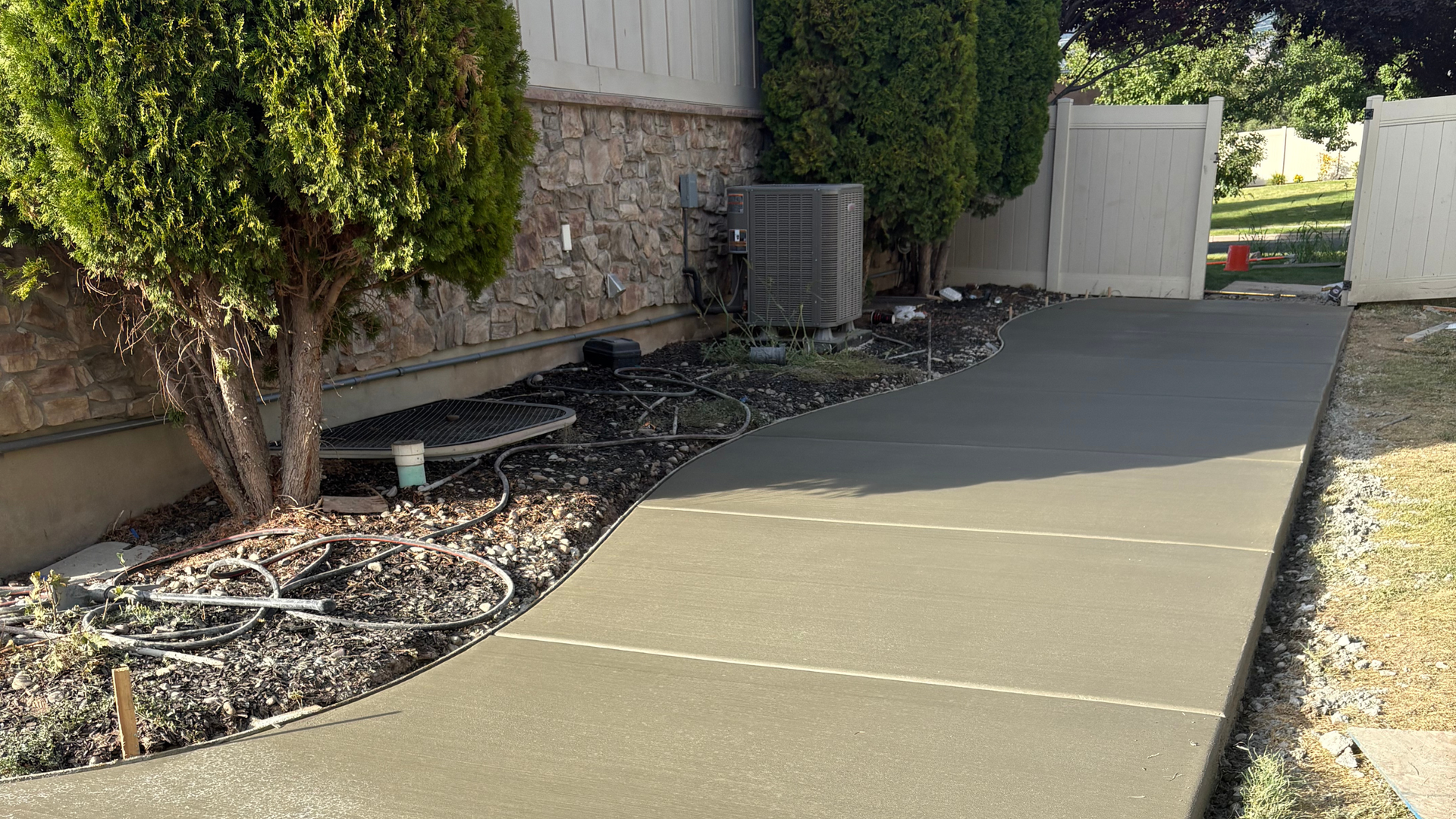
Here is the honest range for 2026. A standard concrete walkway in the Syracuse area generally runs about 8 to 12 dollars per square foot installed for a basic broom finish. Decorative and stamped finishes push that to roughly 12 to 20 dollars per square foot. For a typical 200-square-foot path, that lands most standard projects between about 1,600 and 2,400 dollars, with premium finishes climbing higher.
Those are ballpark figures, not a quote. The real number depends on the size and shape of the walk, the finish you choose, how much prep the site needs, and how the walk is reinforced. The sections below unpack each of those so you can read an estimate and understand exactly what you are paying for.
Cost Per Square Foot: Broom Finish vs. Stamped Patterns
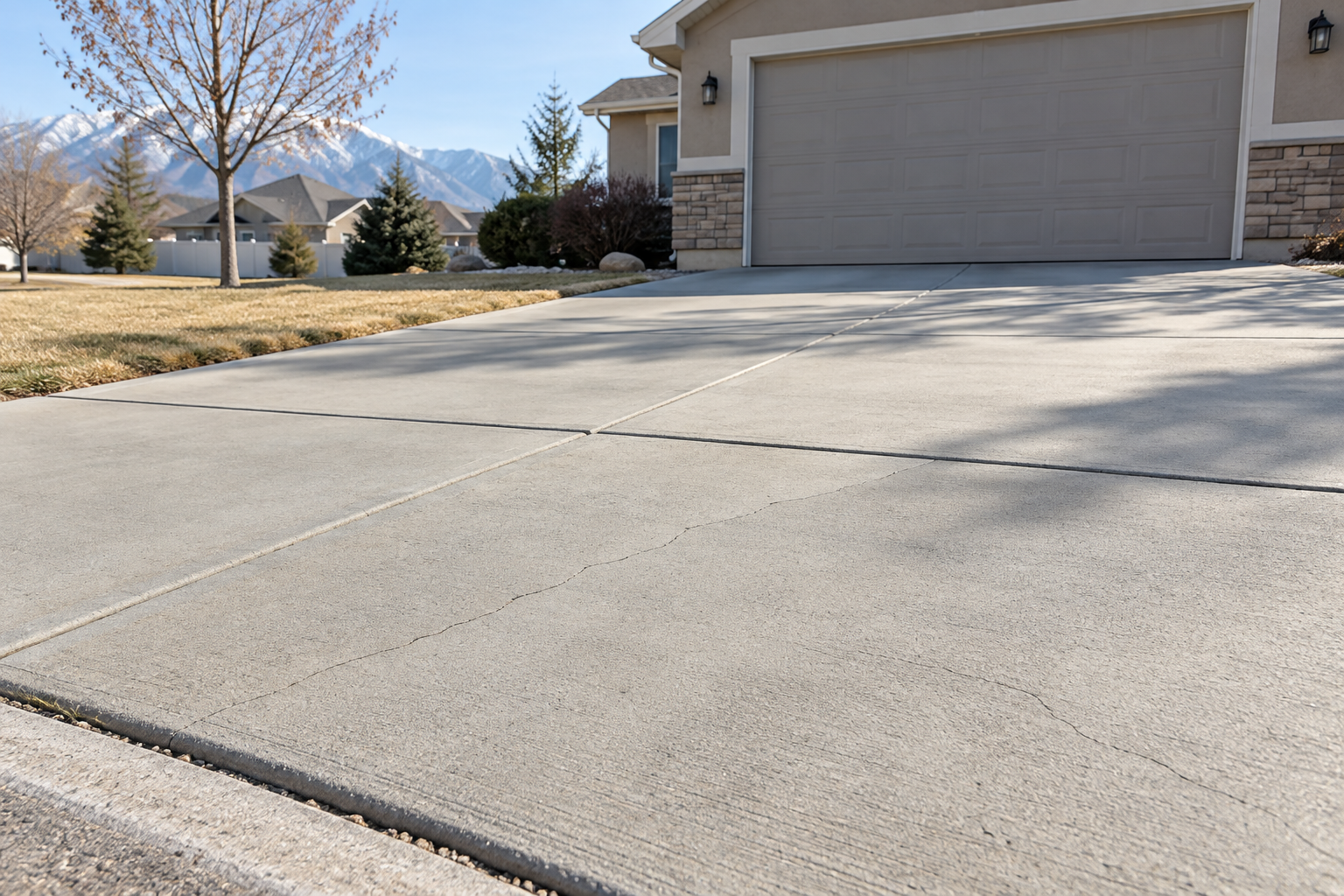
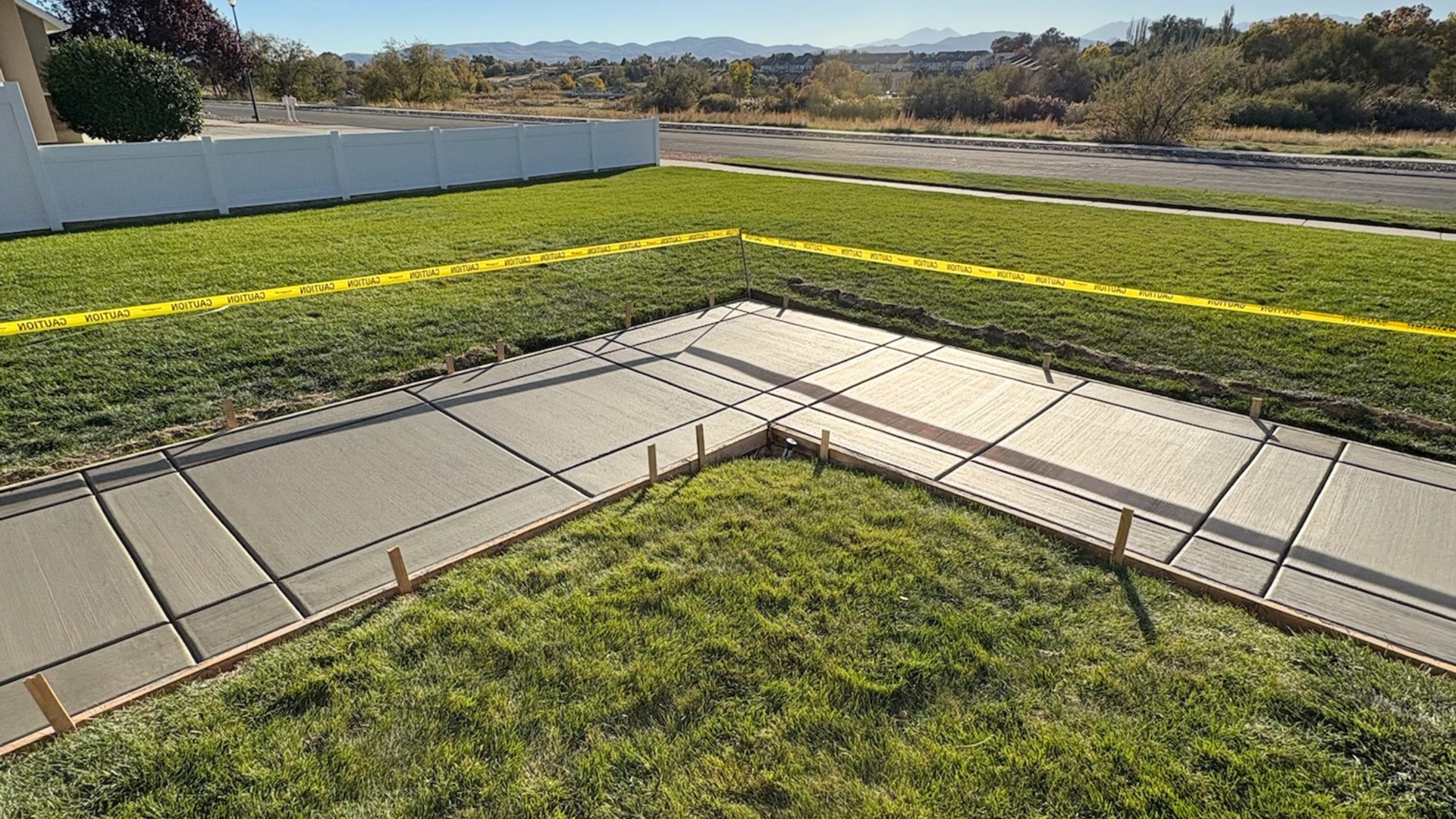
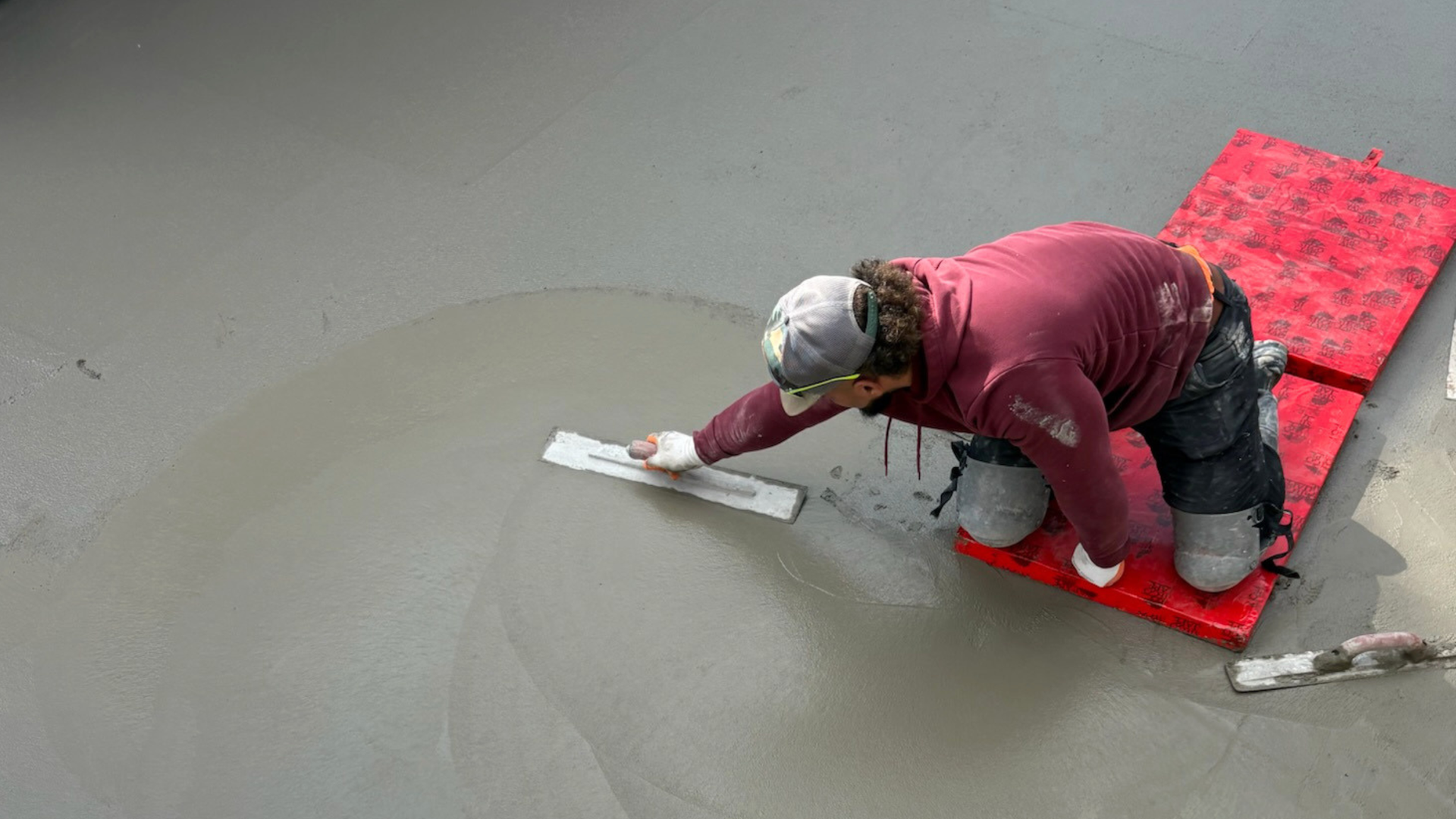
The single biggest choice you control is the finish. A broom finish is the standard, and it is the most affordable, because it is fast to apply and needs no special materials. A crew drags a broom across the fresh surface to create fine grooves, which happen to double as slip resistance. For most walkways, this is the practical, budget-friendly pick.
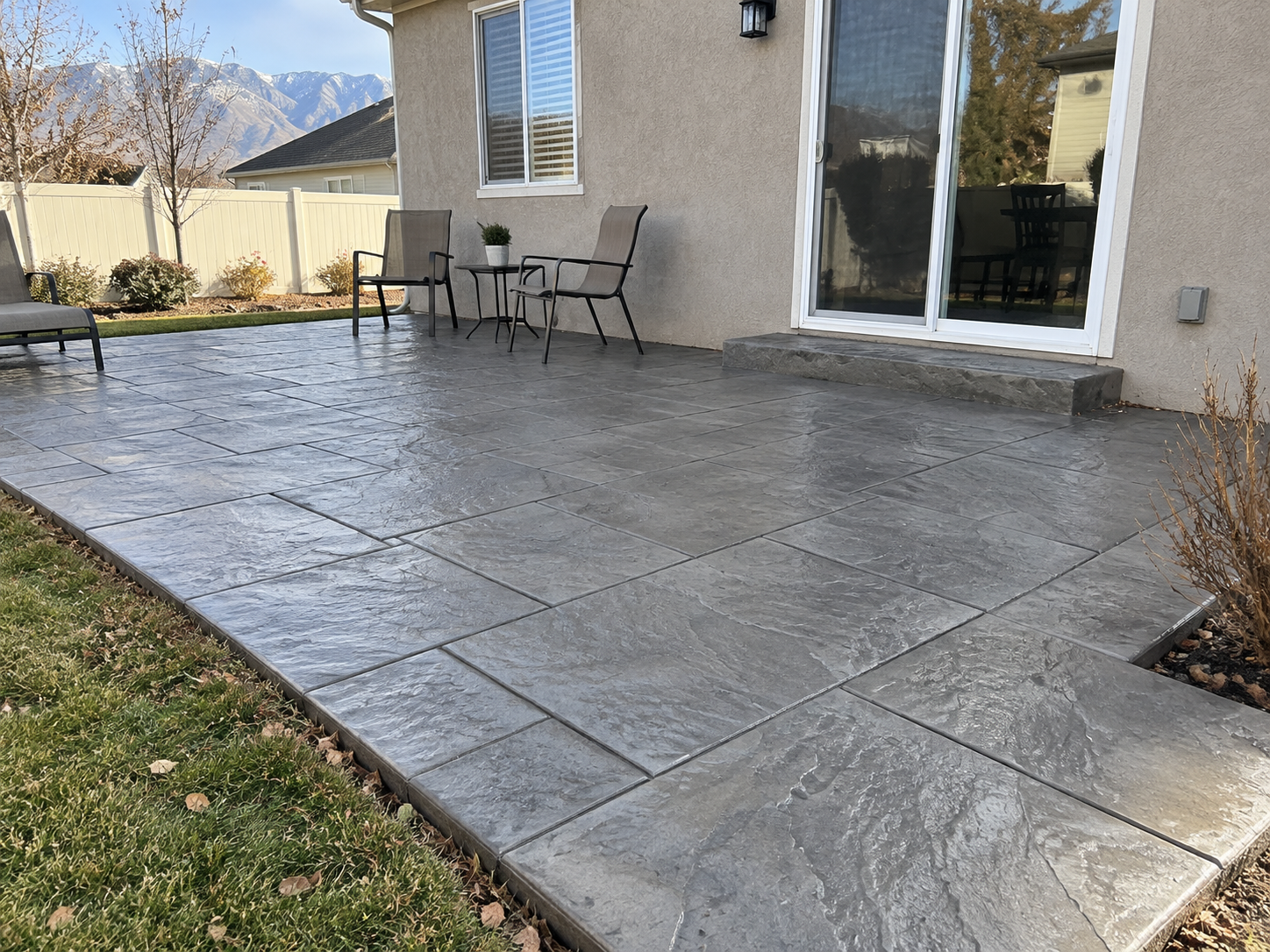
Stamped concrete is where the price climbs. Stamping presses a pattern into the wet concrete to mimic pavers, brick, slate, or stone, and it usually adds color on top. The concrete and reinforcement underneath are typically identical to a broom-finish walk. What you are paying extra for is labor and materials on the surface: the work is slower and more skilled, and it uses color hardeners and release agents. That is why a stamped walk can cost several dollars more per square foot than a plain one. If you want the upgraded look, it is a real value; just know the premium is in the finish, not the slab.
What Drives the Price: Excavation, Base Depth, and Reinforcement
Two identical-looking walkways can carry very different price tags, and the reason is almost always what happens before and beneath the pour. These are the line items that move a quote:
- Excavation and site prep. Removing an old walk, digging out sod, and grading the path all take time and labor. Tearing out existing concrete adds cost, often a few dollars per square foot on its own.
- Sub-base depth and material. A proper walk sits on a layer of compacted road base or gravel. Deeper, well-compacted base costs more but is the foundation of a walk that will not heave.
- Reinforcement. Wire mesh or fiber is common on walkways; rebar shows up where extra strength is needed, such as a section that crosses a driveway. Reinforcement is a modest line item that pays off in crack resistance.
- Size and shape. Straight, simple runs are cheapest. Curves, steps, and tight access mean more forming and hand work.
- Thickness. A standard 4-inch walk costs less than a 5 or 6-inch section built to carry vehicle loads.
- Finish and color. As covered above, broom is the baseline; stamping and color add to it.
When you compare two bids, the cheaper one is often cheaper because it skimped on base prep or reinforcement, the exact things you cannot see once the walk is poured. That is worth keeping in mind, and it is the same principle we cover for driveways in our guide on concrete driveway thickness and reinforcement.
Sample Project Costs at a Glance
Here are rough 2026 ranges for common walkway sizes in the Syracuse area. Treat these as planning estimates; a site visit produces the real number.
| Walkway Size | Thickness | Broom Finish (est.) | Stamped Finish (est.) |
|---|---|---|---|
| 100 sq ft (small path) | 4 in | $800 to $1,200 | $1,200 to $2,000 |
| 200 sq ft (typical walk) | 4 in | $1,600 to $2,400 | $2,400 to $4,000 |
| 300 sq ft (long run) | 4 in | $2,400 to $3,600 | $3,600 to $6,000 |
| 200 sq ft (driveway cross) | 5 to 6 in | $2,000 to $3,000 | n/a (usually broom) |
Built for Utah Winters: Surviving the Freeze-Thaw Cycle
Cost is only half the story. A cheap walk that fails in three winters is the most expensive concrete you can buy. Along the Wasatch Front, flatwork endures roughly 50 to 80 freeze-thaw cycles every year, where water soaks into the concrete and the ground, freezes, expands, and thaws again and again. That cycle is what cracks, scales, and heaves walkways that were not built for it. Here is what actually protects against it.
Why Air-Entrained, Properly Cured Concrete Matters
The most important defense is in the mix. Air-entrained concrete contains microscopic air bubbles that give freezing water somewhere to expand without cracking the surface. For any exterior flatwork in Utah, air entrainment is not optional, it is the baseline. A strong mix, generally around 3,500 to 4,000 PSI or higher for exterior walks, adds durability on top of that.
Curing matters just as much. Concrete gains its strength over weeks, not hours, and a rushed or poorly cured walk never reaches the strength it should. The season you pour in plays into this too, which is why timing is worth planning around; our guides on the best time of year to pour concrete in Utah and on pouring concrete in winter in Utah both dig into how temperature affects the cure. Poured in the right conditions and cured properly, a walk develops the dense, sealed surface that shrugs off freeze-thaw damage.
Compacting the Base Over Lake Bonneville Clay Soils
Now the part almost nobody sees, and the part that fails most often. Much of Syracuse sits on deep Lake Bonneville lacustrine clay, the same rich soil that made this area farmland for generations. That clay is expansive: it swells when it soaks up water and shrinks when it dries. Closer to the Great Salt Lake on the west side of the city, a high water table adds even more moisture to the equation. Expansive clay under a concrete walk is a recipe for heaving and cracking if it is not handled correctly.
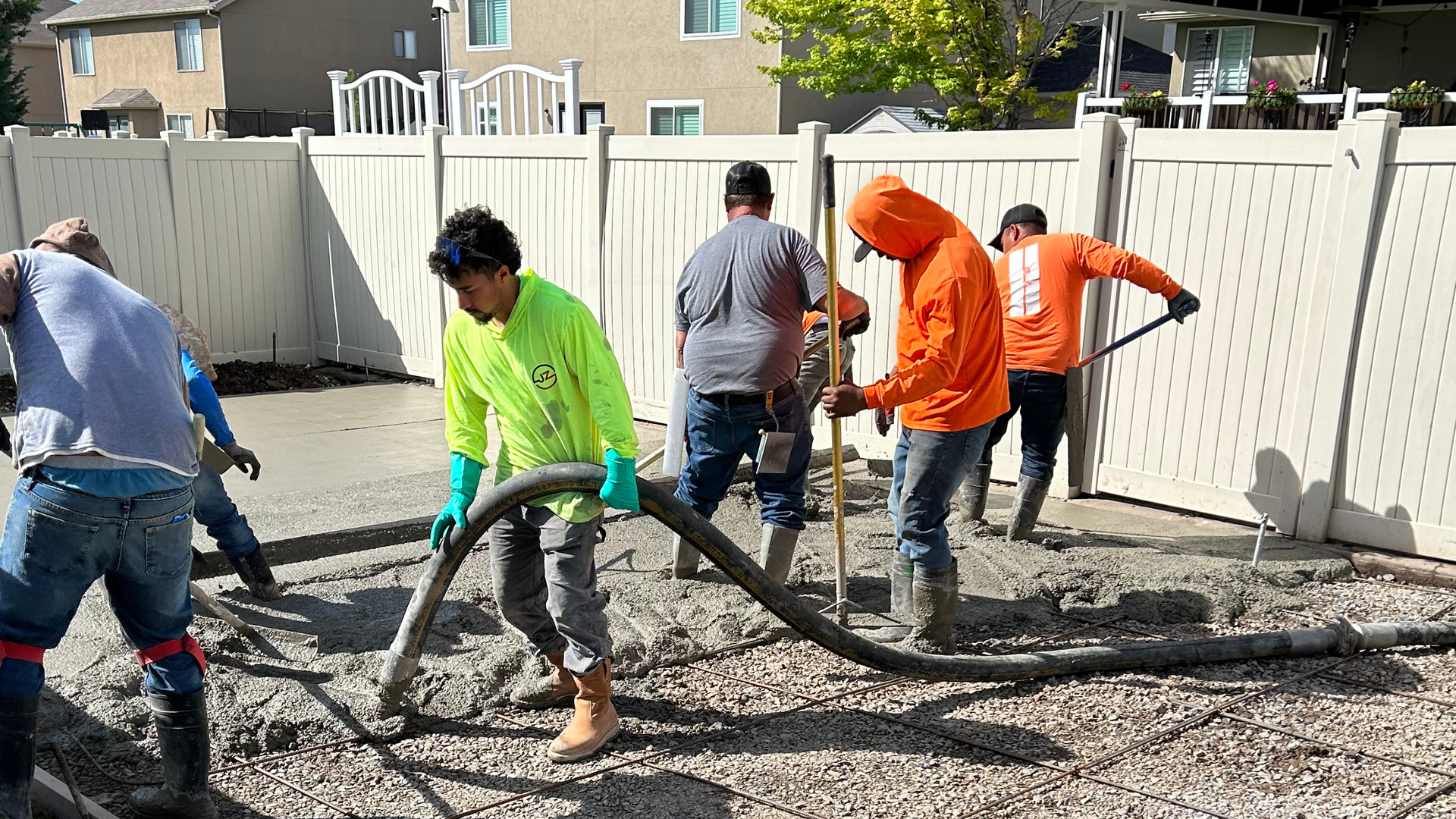
The fix is the base. Instead of pouring straight onto native clay, a proper walk sits on a layer of compacted, well-draining road base or gravel. That layer does two jobs: it spreads the load and it gives water a path to drain away from the clay instead of pooling under the slab. Compaction is what makes it work; loose base settles, and settled base cracks the walk above it. This is exactly the step a low bid tends to shortcut, and it is the difference between a walk that stays flat and one that lifts at the joints within a couple of winters. Building over Davis County clay is not complicated, but it is not optional either.
Design Options and Safety for Syracuse Homes
A walkway is functional, but it is also one of the first things visitors see, so the look counts. In our climate, though, appearance and safety go hand in hand, because the finish that looks good also has to grip in snow and ice.
Finish Choices: Looks and Slip Resistance
You have more options than plain gray concrete. The common choices for residential walks are:
- Broom finish. The standard. Fine grooves give a clean look and solid slip resistance. Best all-around value.
- Stamped concrete. Patterns that mimic stone, slate, brick, or pavers, usually with color. Upscale look at a fraction of real stone.
- Colored or stained concrete. Integral color or surface stain to match the home. Can be combined with stamping.
- Exposed aggregate. A textured, pebbled surface that is both attractive and naturally slip resistant.
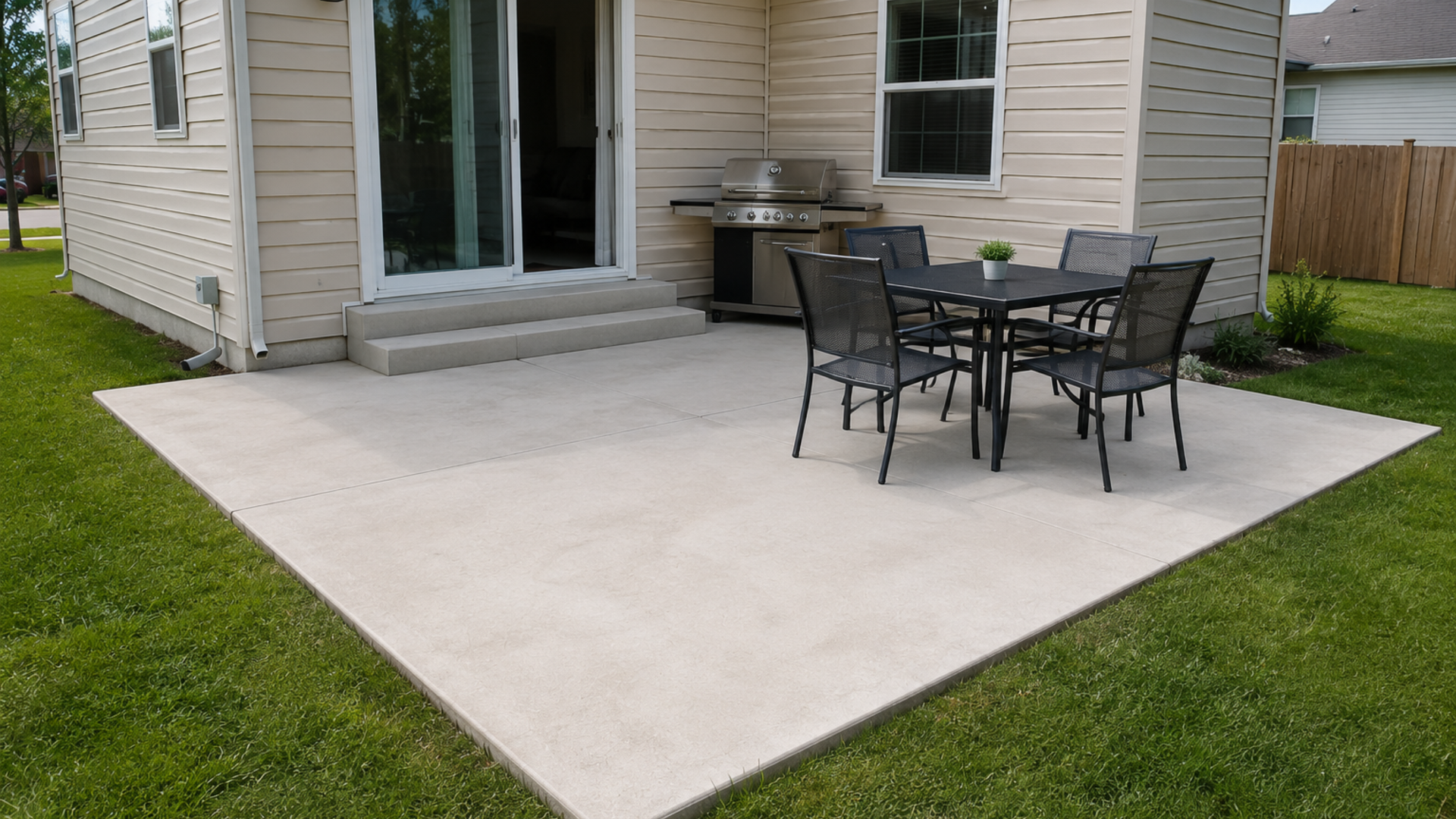
Each finish pairs differently with the home, and any of them can work on a walk or tie into matching concrete patios for a coordinated outdoor space.
Anti-Slip Finishes for Snow and Ice
In Syracuse, slip resistance is not a luxury feature, it is a winter safety issue. A slick walk is a fall risk for months of the year, and as the property owner you are responsible for the condition of the walk in front of your home. That makes texture a real consideration, not just an aesthetic one.
The good news is that the most affordable finish, the broom finish, is also one of the grippiest, because those fine grooves channel water and give shoes something to bite. Exposed aggregate is another naturally non-slip option. If you love the look of stamped concrete, ask about a non-slip additive in the sealer, since a smooth stamped surface can get slick when wet or icy. Matching the finish to Utah winters up front is far easier than retrofitting traction later.
Repair or Replace? Fixing a Failing Walkway
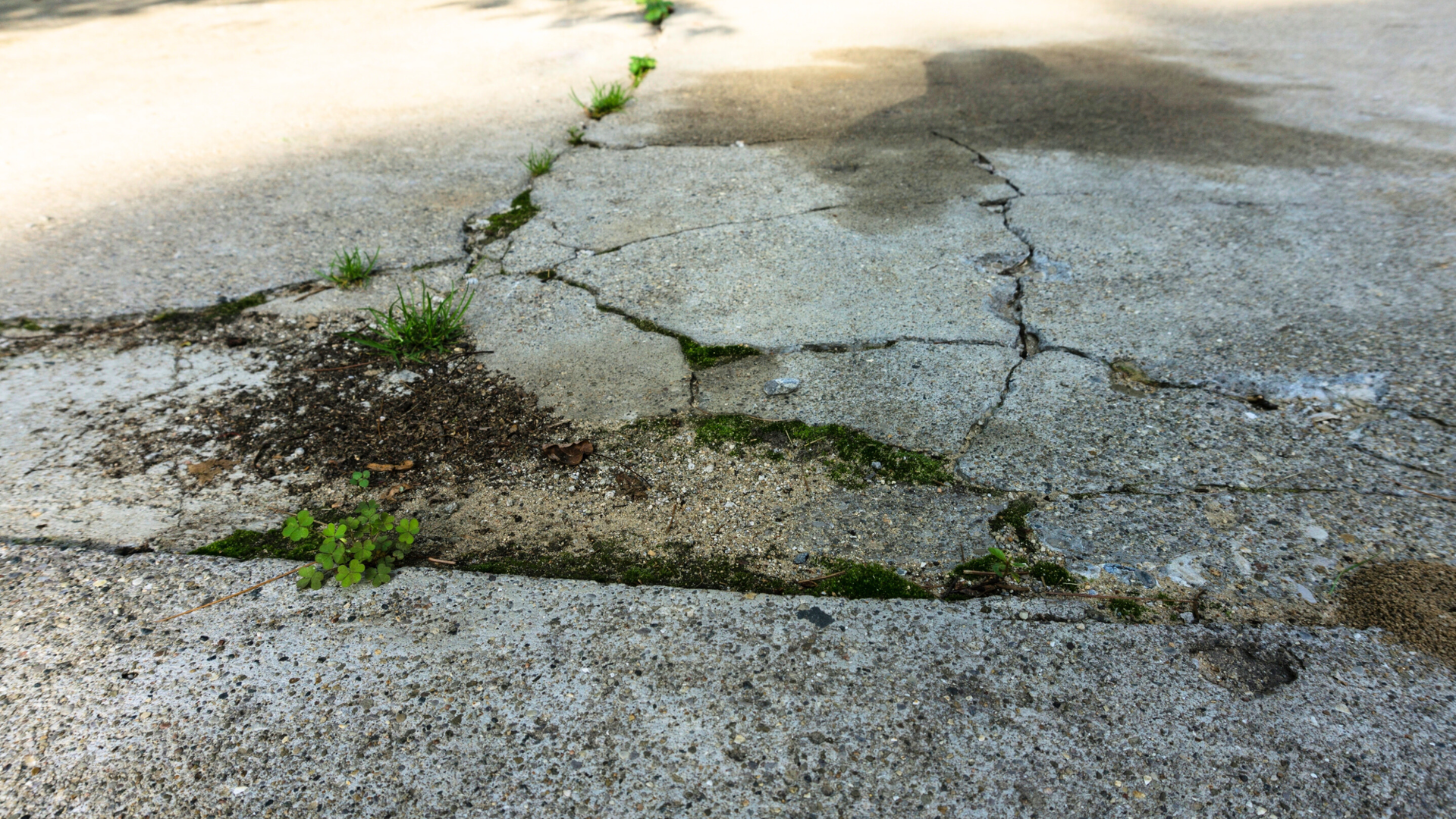
If you already have a walk that is cracked, sunken, or heaved, the question is whether to fix it or start over. The answer depends on how bad it is and what caused it.
When a Sunken Slab Can Be Saved
Not every damaged walk needs to be torn out. If a slab has settled but is otherwise sound, with no major cracking, it can sometimes be lifted back into place and re-supported from below. This works best when the concrete itself is still in good shape and the problem is purely settlement, often from base that was not compacted well the first time. Minor surface cracks can also be sealed to keep water out and slow further damage. When the bones are good, saving the slab is the cheaper path.
When Full Replacement Is the Smarter Spend
Sometimes patching is throwing money at a walk that is going to keep failing. Replacement usually makes more sense when:
- The walk is heaved or cracked in multiple places, not just one spot.
- The damage traces back to a bad base, since lifting the slab without fixing the base only buys a little time.
- Repair estimates approach or exceed about half the cost of a full replacement.
- The concrete is spalling or scaling across the surface, a sign the mix or cure was compromised.
- You want to change the layout, width, or finish anyway.
The rule of thumb contractors use is simple: when repair costs climb past roughly half of replacement, replace it. You get a walk built correctly on a proper base, a fresh lifespan, and usually a workmanship warranty, instead of paying repeatedly to chase the same problem.
Permits, Timing, and Getting It Done Right
A couple of practical notes before you start. Most private walkways on your own property do not require a building permit in Syracuse, but if the work touches the public sidewalk, curb, or gutter, that reaches into the city's right-of-way and needs approval first. We break the whole topic down in our guide on whether you need a permit for concrete work in Syracuse, and it is worth a quick read before you begin.
Timing matters too. Spring and early fall give concrete the most forgiving conditions to cure, and they tend to be busy, so booking ahead pays off. Pair a well-timed pour with a proper base and the right mix, and you get a walkway that looks good the day it is finished and stays that way for decades.
Frequently Asked Questions
How much does a concrete walkway cost in Syracuse, Utah?
In 2026, a standard broom-finish concrete walkway in the Syracuse and Wasatch Front area typically runs about 8 to 12 dollars per square foot installed. Stamped or decorative finishes usually run 12 to 20 dollars per square foot. For a common 200-square-foot path, that works out to roughly 1,600 to 2,400 dollars for a standard finish.
What is the difference in cost between a broom finish and a stamped walkway?
A standard broom finish is the most affordable option because it is quick to apply. Stamped concrete costs more, often several dollars more per square foot, because it takes more labor, plus color and release agents to create the pattern. The concrete and reinforcement underneath are usually the same, so the difference is mostly in the finishing work.
Why do concrete walkways crack in Utah, and how is it prevented?
Utah's Wasatch Front sees roughly 50 to 80 freeze-thaw cycles a year, and much of the Syracuse area sits on expansive Lake Bonneville clay that swells and shrinks with moisture. Both stress flatwork. The fixes are a properly compacted, well-draining base, air-entrained concrete, and correctly spaced control joints that direct cracking to hidden lines.
Should I repair or replace a sunken concrete walkway?
A rule of thumb is that if repair would cost more than about half the price of replacement, replacing the walkway is the better value. Minor settling can sometimes be lifted, but a walk that is badly cracked, heaved, or failing at the base is usually cheaper to replace once and build correctly than to patch repeatedly.
How thick should a concrete walkway be?
Most residential walkways are poured 4 inches thick on a compacted base. Sections that may carry vehicle weight, such as where a walk crosses a driveway, should be thicker, usually around 5 to 6 inches with added reinforcement. Thickness and base prep matter more for long-term durability than the finish on top.
Get a Walkway Quote in Syracuse
A concrete walkway is one of the best-value upgrades you can make to a Syracuse home, as long as it is priced honestly and built for the climate it has to live in. The finish sets the look, but the base, the mix, and the cure decide how long it lasts. When you compare quotes, look past the per-foot number and ask what is happening underneath.
At Northmen Concrete, we build walkways and concrete driveway projects across Syracuse and Davis County to stand up to Lake Bonneville clay and Utah winters, with honest pricing and no shortcuts on the base. Whether you want a simple broom-finish path or a stamped showpiece, we are glad to walk you through the options and costs for your specific project. Request a free estimate and we will give you a real number for a walk that lasts.