First, Know This: Some Cracking Is Normal
Before we get into causes, set the right expectation. Hairline cracks are common in healthy concrete, and their presence alone does not mean the slab was poured badly or is failing. Concrete shrinks slightly as it cures, and small surface cracks are often just the result of that natural process.
What matters is the character of the crack, not simply that one exists. A thin, stable hairline crack is very different from a wide, growing, or uneven one. Keep that distinction in mind as you read, because it is the key to knowing when to relax and when to act.
The Main Reasons Concrete Cracks in Utah
Most cracking traces back to a handful of causes, and in our area the climate and soil drive the majority of them. Here are the main culprits.
Freeze-Thaw Cycles
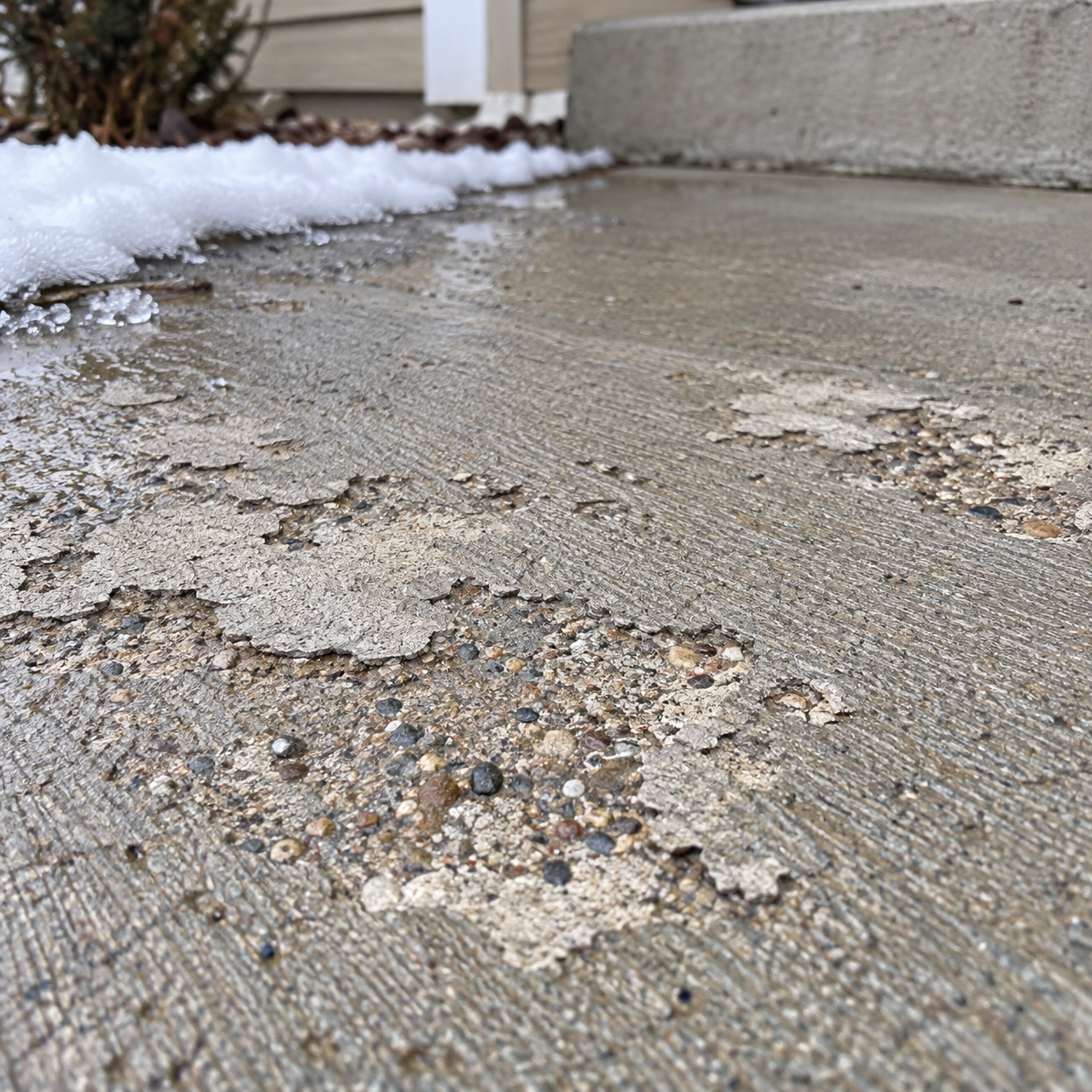
The Wasatch Front runs through roughly 50 to 80 freeze-thaw cycles a year. Water seeps into the concrete and the ground beneath it, freezes, expands, and then thaws, over and over through the winter. That repeated expansion is one of the leading causes of surface scaling and cracking on exterior slabs. Concrete that was not made with air entrainment, which builds in microscopic bubbles that give freezing water room to expand, is especially vulnerable.
Expansive Clay Soil and Settling
Much of the Syracuse area sits on deep Lake Bonneville clay, an expansive soil that swells when wet and shrinks when dry. When the ground under a slab moves, the slab is left unsupported in spots and cracks under its own weight or normal loads. Closer to the Great Salt Lake, a high water table adds even more moisture and movement to the equation.
Shrinkage as Concrete Cures
All concrete loses water as it hardens, and as it does, it shrinks. If that shrinkage is not planned for with properly spaced joints, the slab relieves the stress by cracking wherever it wants. This is the most common source of the routine cracks people notice, and it is largely preventable with good jointing.
Poor Base Preparation
The strongest concrete in the world will crack if it sits on a weak base. A subgrade that was not excavated, filled with the right material, and compacted properly will settle unevenly, and the slab follows. This is the single most common installation shortcut behind premature cracking, and it is completely invisible once the concrete is poured.
Too Much Water in the Mix
Adding extra water makes concrete easier to place, but it weakens the final product and increases shrinkage. A wetter mix cracks more. A correct water-cement ratio is one of the quiet fundamentals that separates concrete built to last from concrete poured to be easy.
The Four Types of Cracks (and Which to Worry About)
Not all cracks mean the same thing. Learning to read them tells you whether you are looking at cosmetic aging or a real issue. There are four main types.
Plastic Shrinkage Cracks
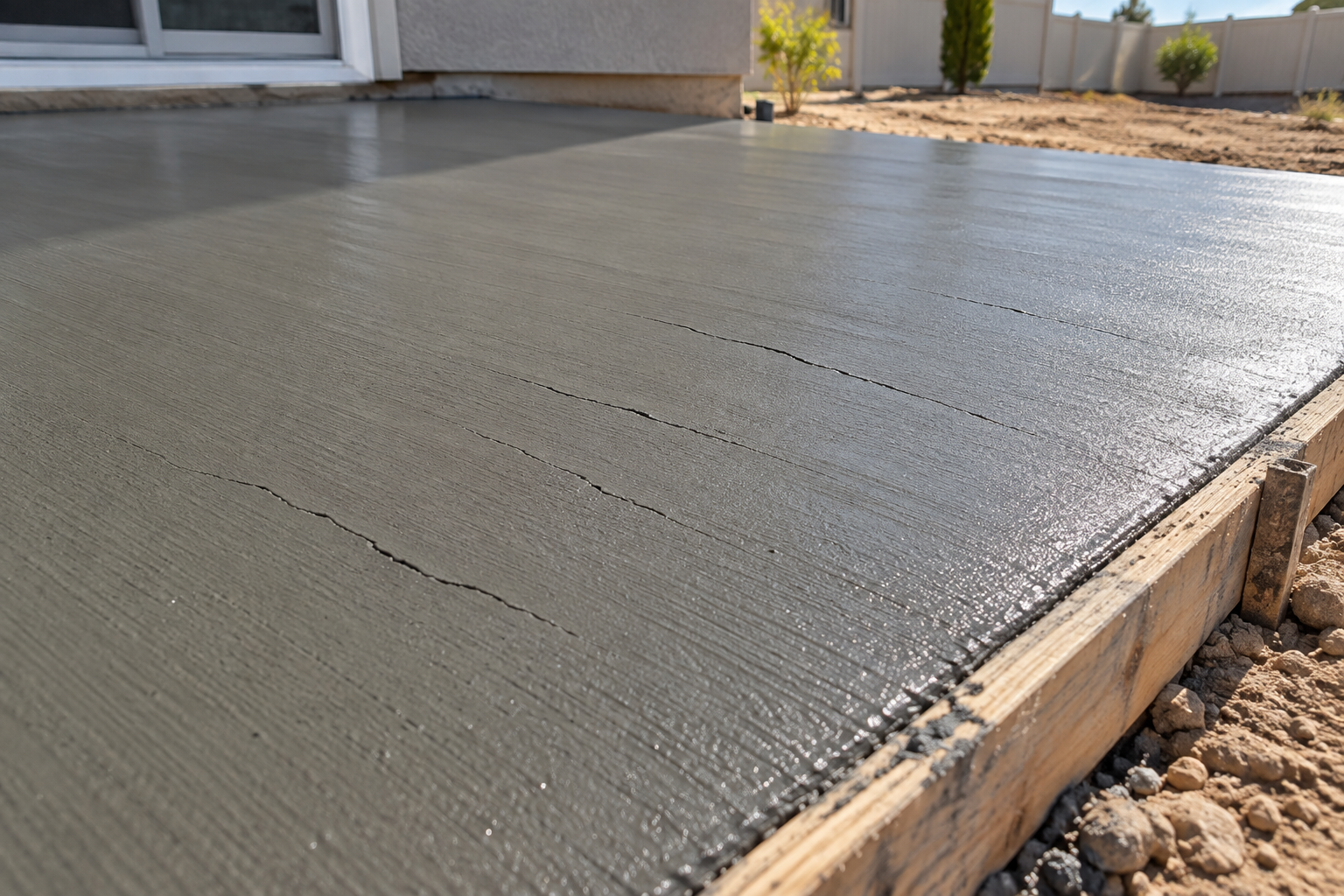
These form while the concrete is still fresh and setting, often within the first day. They show up as short, roughly parallel cracks, usually caused by the surface drying too fast in heat, wind, or low humidity. They are typically shallow and cosmetic, though they can be a finishing concern. Importantly, control joints do not prevent this type, since the cracks form before the concrete is hard enough to cut.
Drying Shrinkage Cracks
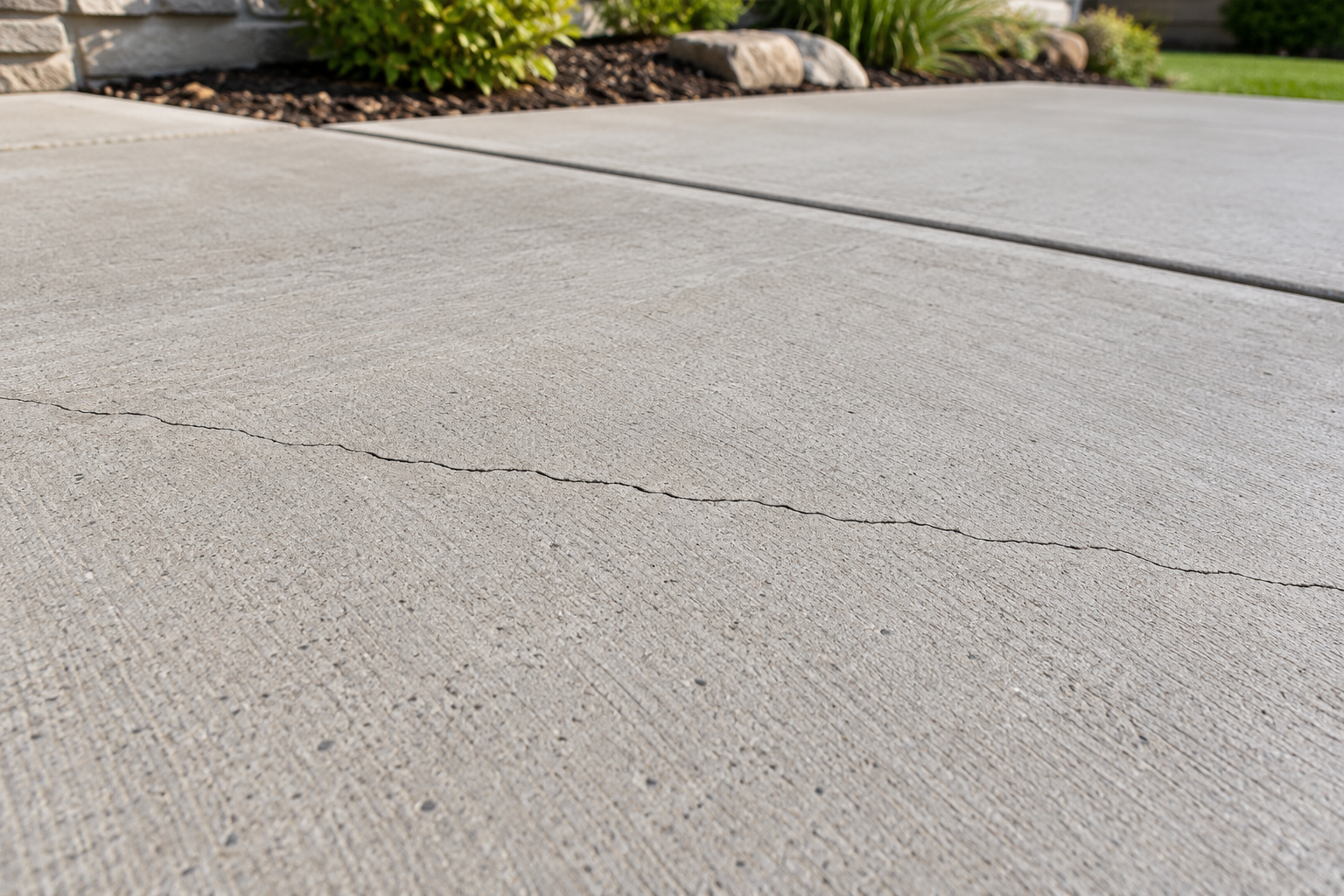
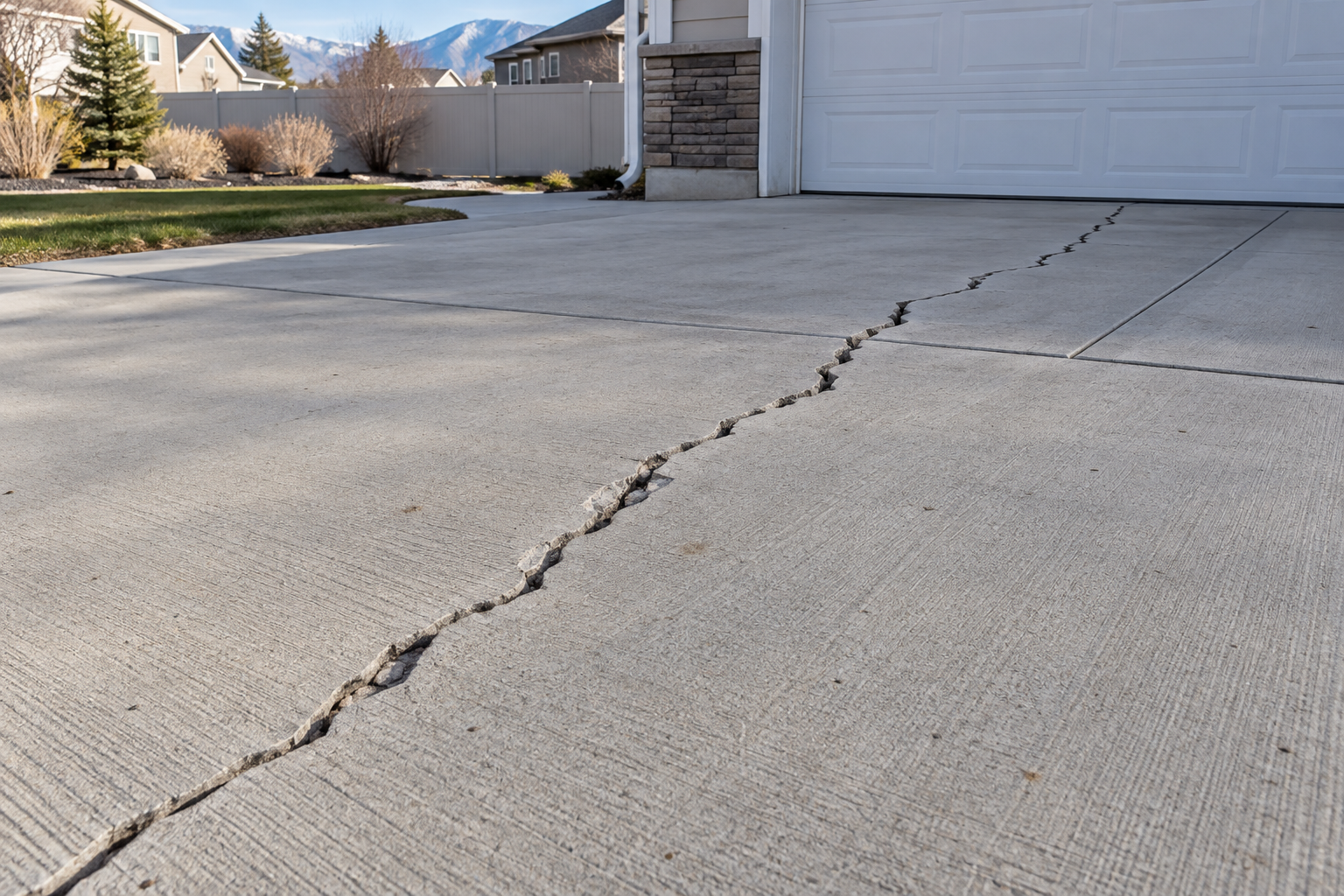
These develop after the concrete hardens, as it continues to lose moisture and contract. A drying shrinkage crack is usually a fine, straight line that stays hairline-wide with no vertical offset between the two sides. This is the everyday crack that control joints are designed to manage by guiding the movement into planned lines. Most are harmless.
Settlement Cracks
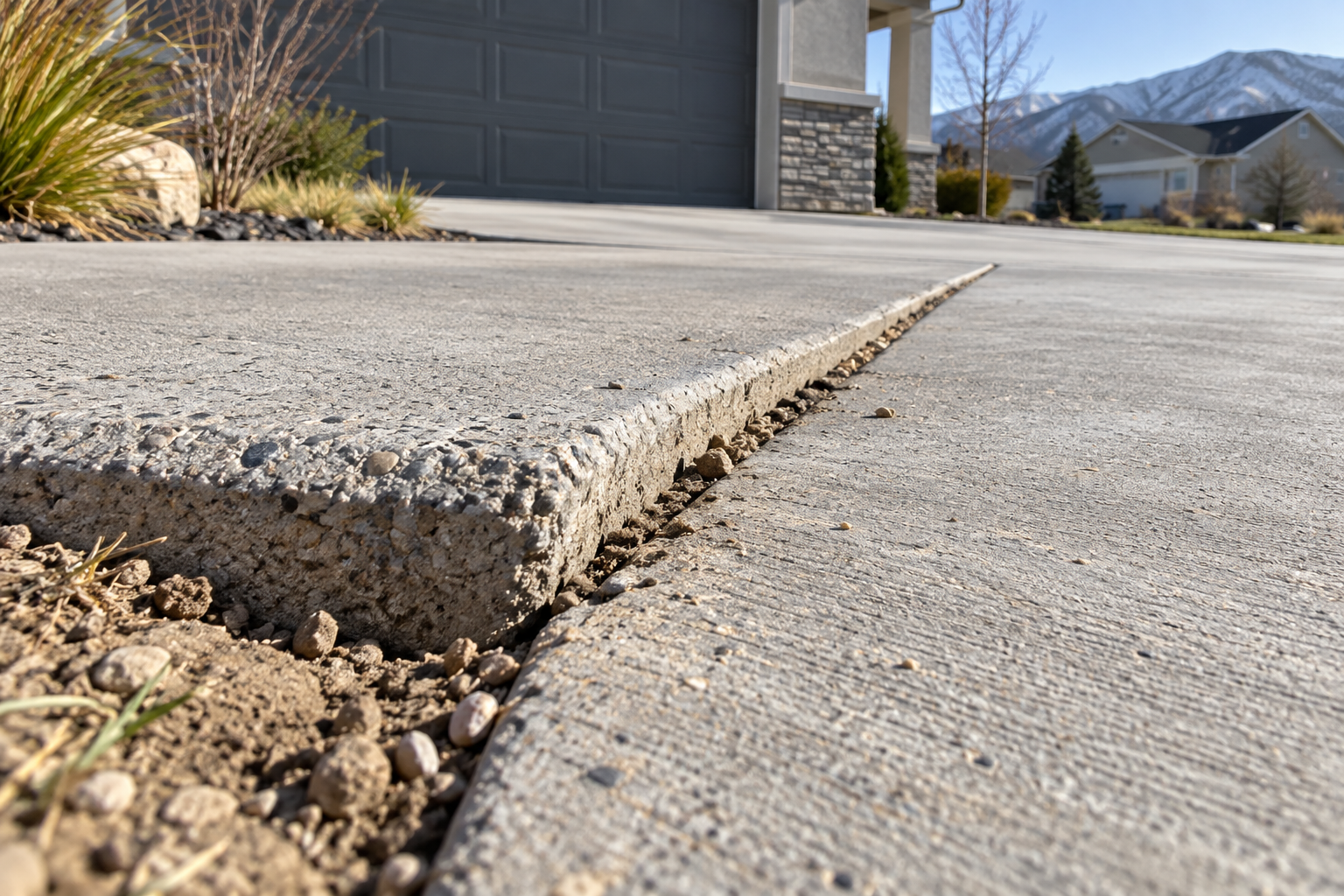
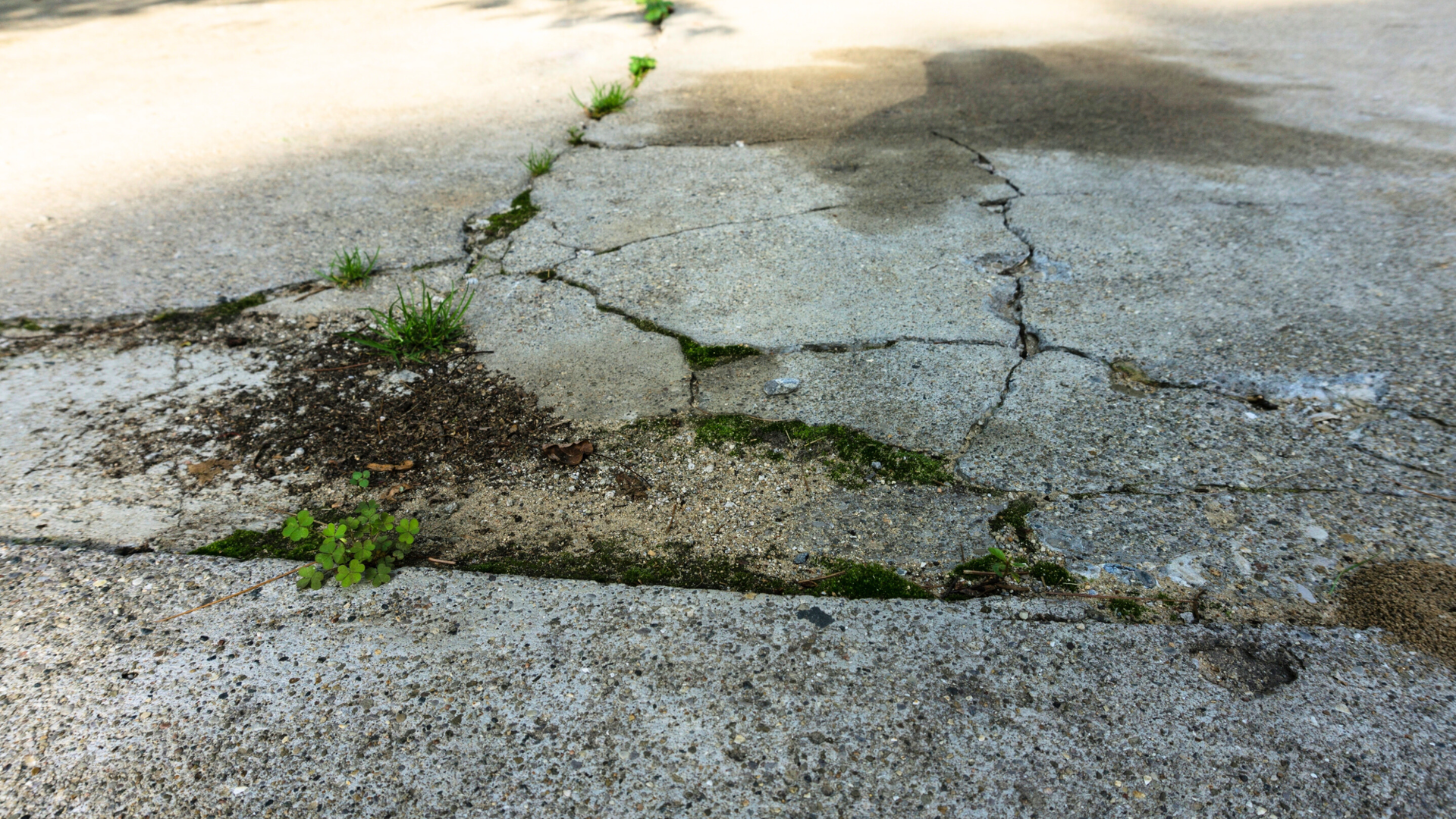
These appear when the ground beneath the slab moves or gives way, which is common over our expansive clay. The telltale sign is a step, where one side of the crack sits higher than the other. Settlement cracks point to a base or soil issue rather than the concrete itself, and they are worth a professional look because the cause tends to continue.
Structural Cracks
These are the ones to take seriously. A structural crack is typically wider than about a quarter inch, may widen over time, and can run diagonally from corners or across the full slab. They signal that the concrete is under stress it cannot handle, whether from overloading, serious soil movement, or a design problem. Structural cracks should always be assessed by a professional.
How to Prevent Concrete Cracks
The good news is that most damaging cracks are preventable, and prevention happens during the pour, not after. A quality installation built for Utah conditions comes down to a handful of non-negotiables:
- Compact the base properly.
A well-excavated, correctly filled, and thoroughly compacted subgrade is the foundation of a crack-free slab.
- Use the right concrete mix.
Air-entrained concrete and a correct water-cement ratio are essential for our freeze-thaw climate.
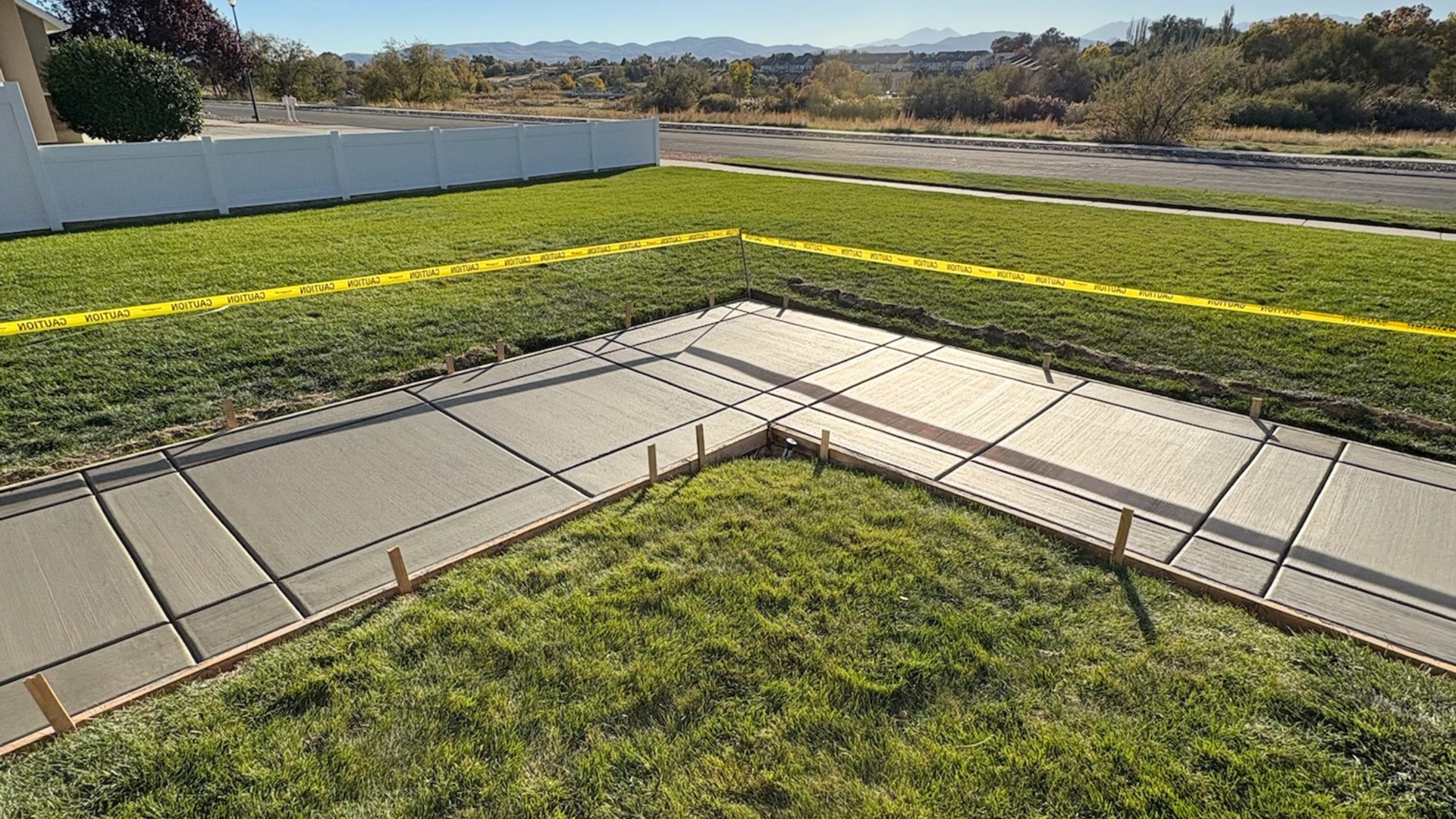
- Cut control joints at the right spacing. Joints give shrinkage a planned place to go. A common rule of thumb spaces them at 2 to 3 times the slab thickness in feet.
- Add reinforcement where it counts.
Rebar or wire mesh holds the slab together and limits crack width, especially on driveways and load-bearing sections.
- Pour the right thickness.
Undersized slabs crack under loads they were never built for, which is covered in our guide on
concrete driveway thickness and reinforcement.
- Time the pour and cure it well.
Pouring in good conditions and curing the concrete slowly prevents rapid moisture loss. Our guide on the
best time of year to pour concrete in Utah explains why timing matters here.
- Manage water around the slab.
Grading and drainage that move water away reduce both freeze-thaw damage and soil movement.
These steps are not extras, they are the standard for concrete that has to survive our winters. Skipping any one of them is where premature cracking usually starts. For the science behind jointing and air entrainment, the
Portland Cement Association guidance on cracking and the
American Concrete Institute are solid, non-commercial references.
When to Call a Professional
Some cracks you can watch, and some you should not ignore. Reach out for a professional assessment when you see any of the following:
- A crack wider than about a quarter inch.
- A crack that is actively getting wider or longer over time.
- A vertical offset, where one side of the crack is higher than the other.
- Cracks radiating diagonally from the corners of a slab.
- Widespread cracking across the whole surface rather than a single line.
- Any crack paired with pooling water, drainage problems, or visible settling.
If you are unsure, a quick look from an experienced local contractor is worth it. Catching a base or soil problem early is far cheaper than replacing a failed
concrete driveway later.
Frequently Asked Questions
How soon after pouring can concrete start to crack?
Some cracks can appear within hours. Plastic shrinkage cracks form while the concrete is still setting, often on the first day, especially in hot or windy conditions. Other cracks develop weeks or years later as the slab dries, settles, or goes through freeze-thaw cycles.
Should I seal the cracks in my concrete myself?
A thin, stable hairline crack can be sealed with a quality concrete crack filler to keep water out, which is worthwhile before winter. But if a crack is widening, offset, or wider than about a quarter inch, have it assessed first, since filling it hides a problem that may need a real fix.
Does sealing concrete help prevent cracks in Utah?
Sealing does not stop structural or settlement cracks, but a good sealer reduces how much water soaks into the surface, which lessens freeze-thaw damage and scaling over our winters. Resealing every couple of years is a low-cost way to extend the life of exterior concrete.
Are cracks covered by a concrete contractor's warranty?
It depends on the contractor and the cause. Reputable installers stand behind workmanship, so cracks caused by poor base prep or bad jointing may be covered, while normal hairline shrinkage usually is not. Ask what the warranty covers before you hire, and get it in writing.
Is a cracked driveway a reason to replace the whole slab?
Not always. A few hairline cracks are normal and can be sealed. Replacement makes sense when cracks are widespread, widening, or tied to a failing base, since patching over a bad base only delays the same problem. A contractor can tell you which situation you have.
Keep Your Concrete Crack-Free in Syracuse
Concrete cracks for reasons that are largely predictable here: freeze-thaw cycles, expansive clay, natural shrinkage, and shortcuts in the base or the mix. Knowing which cracks are harmless and which ones matter puts you in control, and it helps you spot the difference between a slab that is aging normally and one that needs attention.
The best defense is a slab built correctly for our climate from the start, with a compacted base, the right mix, proper joints, and good drainage. At Northmen Concrete, we build and repair concrete across Syracuse and Davis County with those local conditions front of mind, so your driveway, patio, or walkway holds up through Utah winters. If a crack has you concerned, or you want new concrete done right the first time,
request a free estimate and we will take a look.
REQUEST A FREE ESTIMATE
CALL US NOW