Concrete Driveway Maintenance in Syracuse: How to Protect Your Driveway and Extend Its Lifespan
Installing a concrete driveway is a major investment for homeowners in Syracuse. Once installation is complete, many people assume the hard work is done. In reality, what you do after installation plays a big role in how long your driveway lasts and how well it performs in Utah’s climate.

Concrete does not need constant attention, but it does benefit from consistent care. With the right maintenance habits, a driveway can stay strong and attractive for decades. Without maintenance, small issues often grow into expensive repairs.
This guide explains how to maintain a concrete driveway in Syracuse, what to expect over time, and how simple steps help protect your investment.
Homeowners who want a full overview of driveway planning, installation, and long-term performance can also review our main guide on concrete driveways in Syracuse for additional context.
Why Concrete Driveway Maintenance Matters in Utah
Syracuse experiences a wide range of weather conditions each year. Hot summers, freezing winters, snow, ice, and repeated freeze-thaw cycles all affect outdoor concrete surfaces.
Concrete expands and contracts as temperatures change. Moisture that enters the surface can freeze and cause damage if left unprotected. Maintenance helps control moisture exposure and surface wear.
Ignoring maintenance does not cause immediate failure. Damage usually happens slowly, which makes it easy to overlook until repairs become necessary.
How Long a Concrete Driveway Should Last
A properly installed and well-maintained concrete driveway can last 25 to 40 years in Utah. Some driveways last even longer with consistent care.
Longevity depends on:
- Base preparation quality
- Slab thickness
- Drainage conditions
- Reinforcement
- Ongoing maintenance
Maintenance does not change installation quality, but it helps preserve it. Homeowners who maintain their driveways often avoid major repairs entirely.
Proper maintenance also helps control ownership costs, which we explain further in our breakdown of concrete driveway cost in Syracuse.
Routine Cleaning for Concrete Driveways
Cleaning remains one of the simplest and most effective maintenance steps. Dirt, leaves, oil, and debris can stain concrete over time. These materials also hold moisture against the surface, which increases wear during winter.
Basic cleaning steps include:
- Sweeping debris regularly
- Rinsing with water as needed
- Using mild soap for oil or tire marks
Pressure washing works well when used carefully. Excessive pressure can damage the surface if done too often or too aggressively.
Keeping the surface clean also helps you spot early signs of wear.
How Traffic Patterns Affect Concrete Driveway Wear
Not all areas of a driveway wear evenly. Sections near garage doors, turning points, and parking areas experience more stress than straight sections.
Tires apply friction when turning or braking. Heavier vehicles increase pressure, especially near slab edges. Over time, repeated stress can cause surface wear or cracking in specific areas.
Rotating parking positions and avoiding sharp turns on the driveway helps distribute wear more evenly and protect the surface.
Sealing a Concrete Driveway
Sealing protects the surface from moisture, stains, and de-icing products. It also helps preserve color and finish.
Most concrete driveways in Syracuse benefit from sealing every two to three years. Driveways exposed to heavy traffic or winter chemicals may need sealing more often.
Sealers create a protective barrier that slows water absorption and surface deterioration. This step plays a major role in extending driveway lifespan.
When to Seal a Concrete Driveway
Timing matters when sealing concrete. Seal during dry weather with moderate temperatures. Avoid sealing during extreme heat or cold.
Spring and fall usually offer ideal conditions in Utah. New concrete typically cures for several months before the first seal. Sealing too early can trap moisture and reduce effectiveness.
Following proper timing improves results and durability.
Managing Cracks Early
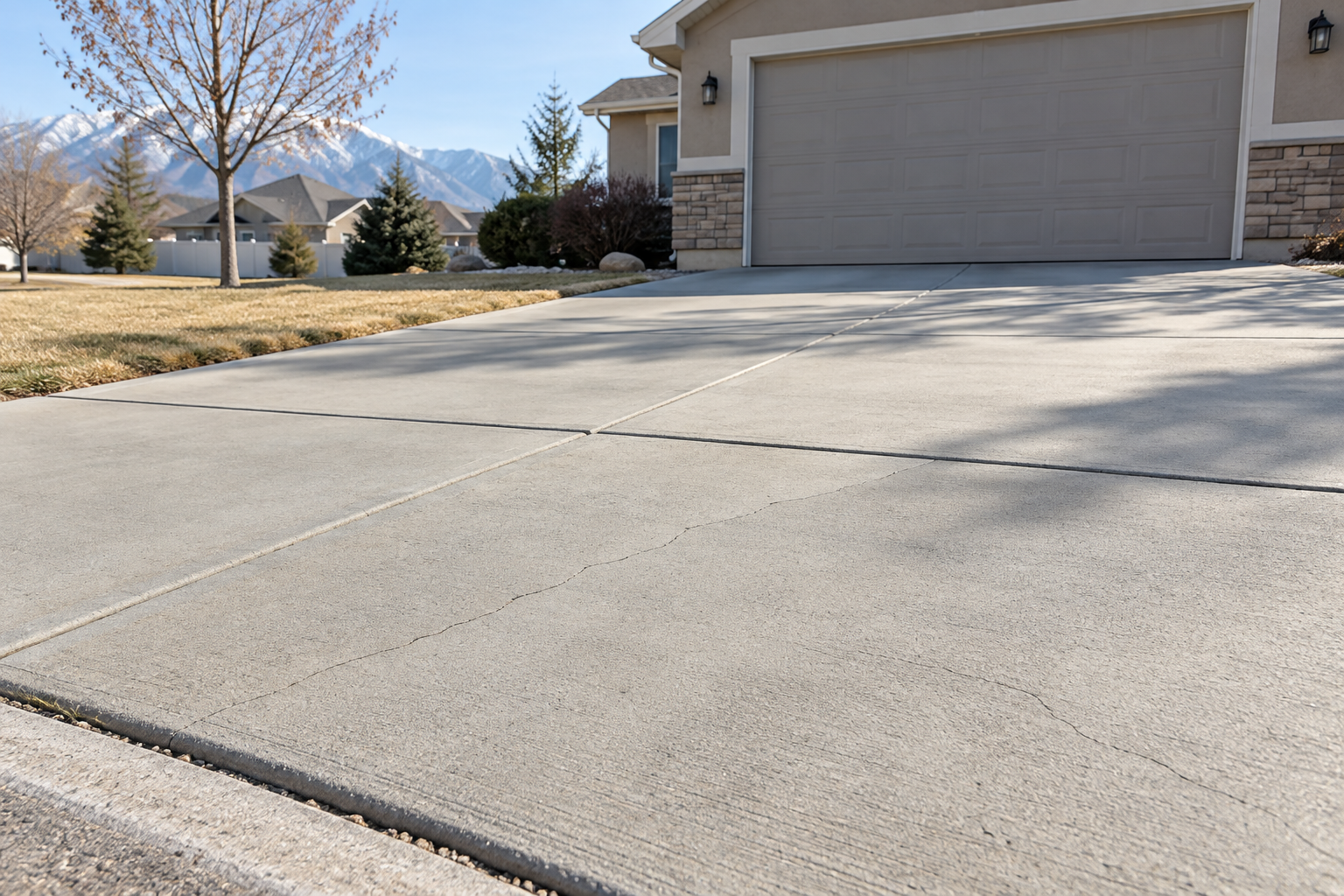
Concrete can develop small cracks over time. These cracks often appear due to temperature changes rather than structural failure.
The key is addressing cracks early. Small cracks remain manageable when sealed promptly. Ignored cracks allow water to enter and freeze, which can widen damage.
Regular inspections help catch cracks before they grow.
Hairline Cracks vs Structural Cracks
Not all cracks signal a serious problem. Hairline cracks usually appear as thin lines and remain stable over time. These cracks often result from curing and temperature changes.
Structural cracks widen gradually and may show uneven slab movement. These cracks often require professional evaluation.
Knowing the difference helps homeowners respond appropriately and avoid unnecessary concern or delayed action.
Avoiding Damage From De-Icing Products
Winter maintenance requires special care. Some de-icing products damage concrete surfaces over time.
Products containing ammonium nitrate or ammonium sulfate can cause surface scaling and deterioration. Repeated use accelerates wear.
Safer alternatives include:
- Calcium magnesium acetate
- Sand for traction
- Minimal use of chemical de-icers
Prompt snow removal reduces the need for chemical products altogether.
Snow Removal Best Practices for Concrete Driveways
Snow removal affects surface longevity more than many homeowners realize.
Use plastic or rubber-edged shovels instead of metal blades. Metal tools can chip or scrape the concrete surface.
Adjust snow blower skid shoes so they glide over the surface rather than scrape. Gentle snow removal protects the finish and reduces long-term wear.
Preventing Surface Scaling and Spalling
Scaling occurs when the top layer of concrete flakes or peels. This issue often results from moisture penetration combined with freeze-thaw cycles.
Proper sealing and drainage reduce scaling risk significantly. Avoid using harsh chemicals or excessive pressure washing.
Preventive care keeps the surface intact and visually clean.
Protecting Driveway Edges
Driveway edges experience more stress than the center of the slab. Vehicle tires often roll along edges, increasing pressure.
Avoid parking heavy vehicles on unsupported edges. Reinforced edges handle stress better, but repeated overloading can still cause cracking.
Keeping edges clean and sealed helps maintain strength and appearance.
Landscaping Tips That Help Protect Concrete Driveways
Landscaping near the driveway affects long-term performance.
Soil buildup against slab edges traps moisture. Tree roots can shift slabs over time. Irrigation overspray keeps concrete damp longer than necessary.
Maintain clean edges, trim back vegetation, and direct sprinklers away from the driveway to reduce wear and moisture exposure.
How Drainage Affects Concrete Driveways
Water management plays a major role in driveway health. Standing water increases moisture absorption and surface wear.
Poor drainage allows water to freeze beneath the slab, which can cause movement and cracking. Clear gutters, downspouts, and nearby drainage paths regularly.
Proper water flow protects both the driveway and your home’s foundation.
Seasonal Maintenance Checklist
Concrete driveway care changes slightly throughout the year.
Spring
- Clean debris and stains
- Inspect for winter damage
- Plan sealing if needed
Summer
- Monitor surface wear
- Clean oil or tire marks
- Avoid heavy equipment on the slab
Fall
- Seal before winter if needed
- Remove leaves and organic debris
- Prepare for snow removal
Winter
- Use safe de-icing methods
- Remove snow promptly
- Avoid metal shovels
Following a seasonal routine keeps maintenance simple and effective.
How Maintenance Affects Repair Needs
Well-maintained driveways rarely require major repairs. Small maintenance tasks reduce the likelihood of:
- Large cracks
- Surface scaling
- Slab movement
- Premature replacement
When maintenance lapses, repair costs increase quickly. Consistent care saves time and money over the long term.
Many maintenance outcomes trace back to how the driveway was built, which is why our guide on concrete driveway installation in Syracuse explains what happens before the first pour.
Signs Your Concrete Driveway Needs Professional Attention
Some warning signs indicate deeper issues.
Watch for:
- Cracks that widen each year
- Uneven or sunken sections
- Pooling water after rain
- Surface deterioration that spreads
Early professional evaluation often prevents full replacement and limits repair costs.
When to Call a Professional
Some issues go beyond routine maintenance. Contact a contractor if you notice ongoing cracking, drainage problems, or surface damage that worsens.
Professional assessment helps determine whether repairs, resurfacing, or targeted fixes make sense. Acting early often preserves more of the existing driveway.
How Maintenance Supports Long-Term Value
Concrete driveways contribute to curb appeal and home value. A clean, well-maintained driveway creates a strong first impression.
Buyers often view concrete as a durable, low-maintenance feature. Proper upkeep reduces inspection concerns and supports resale confidence.
Maintenance protects both appearance and performance.
Final Thoughts
Concrete driveway maintenance does not require constant effort, but it does require consistency. Simple steps like cleaning, sealing, and early crack management help your driveway perform well in Utah’s climate.
With proper care, a concrete driveway remains strong, attractive, and functional for decades. Maintenance protects your investment and reduces long-term repair needs.
Your Next Step
At Northmen Concrete, we help homeowners in Syracuse and nearby areas maintain and protect their concrete driveways. Whether you need sealing, repairs, or professional guidance, we provide honest recommendations and quality service.
If you have questions about maintaining your driveway or notice signs of wear, contact us today. We will review your driveway and help you keep it in excellent condition for years to come.
Contact Northmen Concrete today to schedule your free driveway evaluation.